

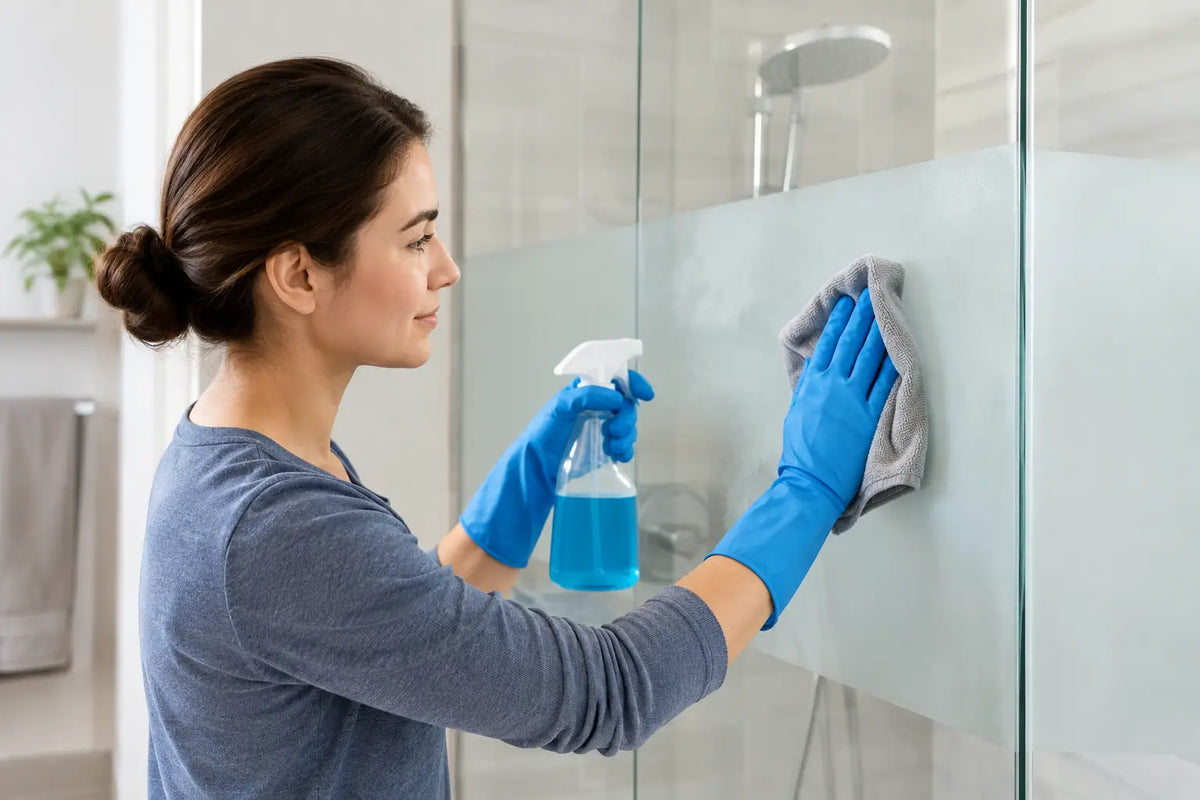
A shower door can look permanently cloudy even after you have scrubbed it repeatedly. That is because the white haze may be sitting on the glass, embedded in its microscopic pores, or etched into the surface itself. Knowing how to restore etched shower glass starts with identifying which problem you actually have. The right process can remove stubborn mineral buildup and dramatically improve clarity. True etching, however, requires a more careful approach and may not fully disappear with ordinary cleaning.
Is It Etching or Hard-Water Buildup?
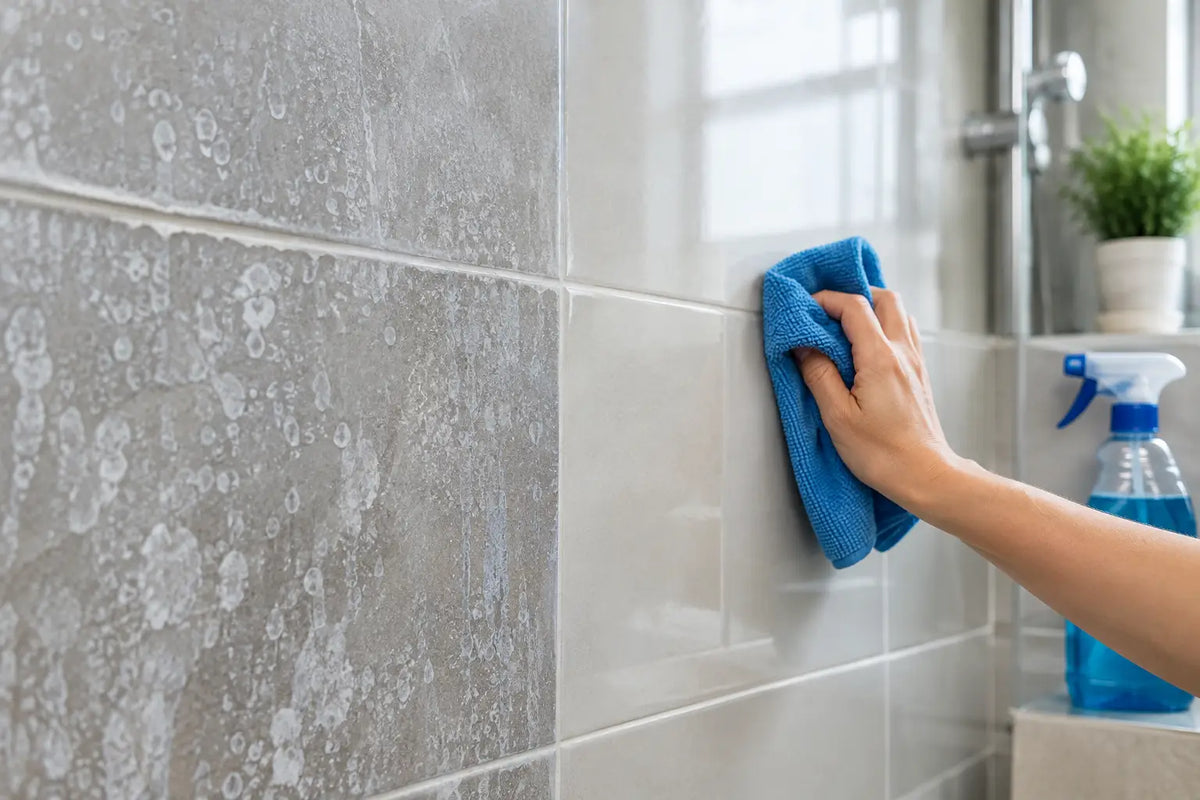
Glass is not perfectly smooth. Under magnification, it contains tiny peaks and valleys that can trap mineral residue, soap scum, and cleaning-product film. When hard water dries on the door day after day, calcium, magnesium, and silica deposits build up. Those deposits scatter light, making clear glass look dull, frosted, or permanently damaged.
Hard-water staining often feels rough or crusty. It may improve when treated with a purpose-made mineral deposit remover. Etching is different. It occurs when repeated exposure to alkaline cleaners, aggressive abrasives, or long-standing mineral deposits changes the glass surface itself. The area may feel smooth but look hazy, blotchy, or slightly iridescent.
A quick test can help. Clean a small section with a non-abrasive hard-water stain remover, following the product directions precisely. If the spot becomes clearer, you are likely dealing with removable contamination. If there is little change after proper cleaning, especially in the most frequently wet areas, the glass may be etched.
This distinction matters. More force is not the answer to etching. Scrubbing harder with rough pads, powders, or razor blades can create fine scratches and make the door look worse.
What You Can Realistically Restore
Many shower doors described as "etched" are actually coated in layers of mineral deposits and soap residue. These can often be restored to a noticeably clearer finish with a targeted cleaning process. Even when light etching is present, removing the surface buildup can improve appearance and reveal the true condition of the glass.
Deep etching is permanent physical damage. A standard cleaner cannot rebuild glass that has been dissolved or pitted at a microscopic level. In those cases, professional glass polishing may improve the appearance, but it has trade-offs. Mechanical polishing can alter optical clarity, create distortion, or affect the uniformity of tempered shower glass if it is performed incorrectly. Severe damage may ultimately require replacement.
The practical goal is to remove what can be removed, avoid creating additional damage, and protect the clean glass from the conditions that caused the problem.
How to Restore Etched Shower Glass Step by Step
Start with a gentle deep clean
Rinse the door with warm water to loosen fresh residue. Apply a non-abrasive cleaner formulated for hard-water stains and soap scum. These products are designed to break down mineral deposits without the uncontrolled abrasion of scouring powders or harsh DIY mixtures.
Work in manageable sections so the product does not dry on the glass. Use a soft microfiber towel, a non-scratch sponge, or a cleaning pad specifically rated as safe for glass. Keep the surface wet while you work, then rinse thoroughly. Repeat the process as needed rather than escalating immediately to a more aggressive method.
Avoid steel wool, gritty powders, and abrasive scrub pads. They may appear to work because they remove surface residue quickly, but they can leave fine scratches that hold more dirt and change how light reflects off the door.
Inspect the glass while it is wet and dry
After rinsing, look at the shower door from several angles. Wet glass can temporarily hide etching, while dry glass reveals haze and water spots more clearly. If the glass looks clear while wet but turns cloudy as it dries, minerals or surface damage are still affecting the finish.
Run clean fingertips across the area after it has dried. Roughness typically points to remaining deposits. A smooth yet cloudy patch is more consistent with etching. This is also a good time to inspect metal tracks, seals, and the bottom edge of the door, where minerals often collect and migrate back onto the glass.
Treat remaining mineral deposits carefully
If the glass still feels rough, perform another targeted cleaning cycle. Stubborn deposits may need contact time, but never leave a chemical on longer than its instructions allow. Rinse completely and dry the door with a clean microfiber towel.
Do not mix cleaners. Combining acids, bleach, ammonia, or other household chemicals can create dangerous fumes or damage surrounding tile, metal hardware, and sealants. Ventilate the bathroom, wear gloves, and test any cleaner on a small, less visible area first.
If a residue remains after several safe cleaning attempts, stop before switching to increasingly abrasive methods. At that point, a surface-care professional can assess whether it is mineral scale, coating failure, scratches, or true etching.
Do not use risky “glass restoration” shortcuts
Viral cleaning tips often promise fast results with razor blades, acidic mixtures, toothpaste, powdered cleansers, or heavy-duty polishing compounds. These shortcuts are unpredictable because shower glass is often tempered, coated, or installed next to sensitive finishes.
Hydrofluoric acid and products containing it should never be used for residential shower-glass restoration. It can chemically attack glass and poses serious health hazards. Strong abrasive compounds may also create visible swirl marks or optical distortion. A shower door is a high-visibility surface, so minor damage can become obvious every time the bathroom lights are on.
When Professional Restoration Makes Sense
Professional restoration is worth considering when the door is structurally sound, the haze is limited to certain areas, and replacement would be costly or inconvenient. A qualified professional can evaluate the glass type, severity of damage, and whether controlled polishing is appropriate.
Ask specifically whether the glass is tempered and how the provider manages optical distortion. Be cautious of anyone who guarantees that deeply etched glass will look brand new. Honest restoration work can improve light etching, but it cannot always return damaged glass to factory clarity.
Replacement may be the better choice when etching is deep across the entire panel, the glass has extensive scratches, or the shower enclosure is already showing worn seals, corroded hardware, or other age-related issues.
Protect the Glass Once It Is Clear
Cleaning removes contamination. Protection changes what happens next. Bare glass attracts water, soap residue, and minerals because moisture can cling to its microscopic surface texture. A quality protective coating is designed to chemically bond with the glass, creating an ultra-thin hydrophobic barrier that helps water bead and release instead of drying into stubborn deposits.
The coating should be applied only after the surface is fully clean, rinsed, and dry. Applying protection over mineral buildup can trap the problem beneath the treatment and reduce performance. Follow the application and cure instructions exactly, especially around shower-door edges and hardware.
ShopDFI surface-care systems are built around this two-part approach: restore the glass first, then protect it with a durable water-repellent barrier. The objective is not a short-lived shine. It is an easier-to-clean surface that needs less aggressive maintenance over time.
Keep Etching From Returning
A protected shower door still benefits from a simple routine. After showering, use a squeegee to remove standing water from the glass. It takes less than a minute and prevents minerals from drying in place. Follow with a microfiber towel on the bottom edge, corners, and tracks if your water is especially hard.
Use a mild, compatible maintenance cleaner rather than rotating through harsh bathroom chemicals. Alkaline cleaners, abrasive tools, and neglected water spots are a costly combination. If you notice water no longer beading or sheeting away as expected, clean the glass properly and evaluate whether the protective treatment needs renewal.
Clear shower glass is not maintained by endless scrubbing. It is maintained by removing deposits before they become damage, then making the surface less hospitable to water spots in the first place. That approach preserves the finish, reduces cleaning labor, and keeps the shower looking like part of a well-cared-for home.

Leave a comment
This site is protected by hCaptcha and the hCaptcha Privacy Policy and Terms of Service apply.