

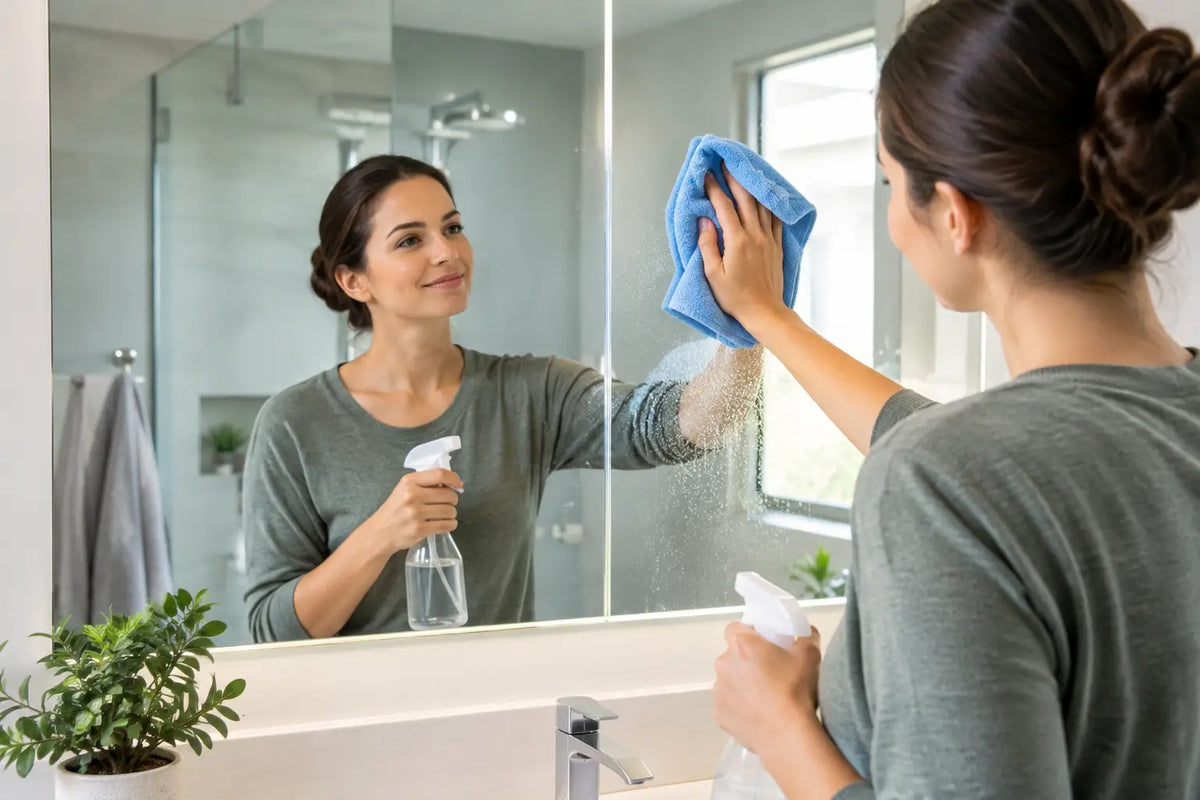
A bathroom mirror can look spotless after cleaning, then develop hazy dots and streaks again after a few showers. To protect bathroom mirrors from water spots, the answer is not stronger glass cleaner or more frequent scrubbing. It is a surface-care routine that removes existing mineral residue, limits direct exposure to moisture, and adds durable water repellency where it makes the biggest difference.
Water spots are more than a cosmetic nuisance. Left in place, hard-water minerals can bond to the mirror’s surface and become increasingly difficult to remove without aggressive cleaning. The goal is to keep the mirror clear while reducing the time, chemicals, and effort required to maintain it.
Why Bathroom Mirrors Get Water Spots So Quickly
A bathroom mirror is exposed to a challenging mix of steam, splashing water, airborne minerals, toothpaste, soap residue, and cleaning-product overspray. When shower steam condenses on the glass, it creates a thin layer of water. As that water evaporates, dissolved calcium, magnesium, silica, and other minerals remain behind.
Hard water makes the issue more noticeable, but even softened water can leave residue when combined with soap scum and everyday bathroom contaminants. The spots may begin as faint white circles or a cloudy film. Over time, repeated wetting and drying can create a stubborn buildup that ordinary glass cleaner only hides temporarily.
Mirror glass is especially vulnerable because it is not perfectly smooth at a microscopic level. Its surface contains tiny pores and irregularities where mineral deposits can settle. Repeated cleaning with abrasive pads or harsh chemicals may also dull the surface or damage the edges and backing of the mirror. That is why prevention should begin with gentle cleaning and a protective strategy, not constant scrubbing.
Clean First, Then Protect Bathroom Mirrors From Water Spots
Protection works best on a truly clean surface. Applying a water-repellent treatment over mineral deposits can lock in haze and prevent the coating from bonding evenly. Start by determining whether you are dealing with fresh water spots, soap film, or established hard-water staining.
For light spotting, use a clean microfiber towel and a quality glass cleaner designed to lift residue without leaving a heavy film. Spray the towel rather than saturating the mirror. This helps prevent excess liquid from reaching the mirror’s edges, where moisture can eventually affect the backing.
For heavier mineral buildup, use a non-abrasive hard-water stain remover formulated for glass. Work in a small area first and follow the product directions carefully. Avoid steel wool, scouring powders, razor blades, and rough scrub pads. These methods can scratch the glass, create areas that hold more residue, or harm decorative mirror coatings.
Once the surface is clear, wipe it with a lint-free microfiber towel until no cleaner or moisture remains. A streak-free, residue-free finish is the foundation for effective protection.
Do not confuse a clean mirror with a protected mirror
Conventional glass cleaners are useful maintenance products, but they are not long-term barriers. They remove soil and create temporary shine. After the next steamy shower or splash from the sink, the same minerals can settle on exposed glass again.
A protective coating has a different job. It is designed to chemically bond with silica-based surfaces, forming an ultra-thin barrier that changes how water behaves on the glass. Instead of spreading into a broad sheet that dries into visible residue, water is more likely to bead, shed, or wipe away with minimal effort.
Use a Hydrophobic Barrier for Easier Maintenance
A hydrophobic glass treatment is one of the most practical ways to reduce recurring mirror spots. When properly applied to clean glass, a quality coating creates a water-repellent surface without changing the appearance of the mirror. The mirror remains clear and reflective, but water and grime have less opportunity to cling to the glass.
This is particularly helpful for mirrors near a shower enclosure, double vanity, or frequently used sink. The coating does not eliminate every drop of water or make cleaning unnecessary. It reduces the grip of contaminants, so routine wiping becomes faster and hard-water residue is less likely to become a major restoration project.
Look for a protective coating made for glass and intended for indoor use. A professional-grade formula should chemically bond rather than sit on top like a short-lived polish. That distinction matters. Temporary water-repellent sprays can provide a brief improvement, but they may wear away quickly and leave residue that causes streaking.
ShopDFI surface-protection systems are designed around this longer-term approach, using rigorously tested coating technology to create an ultra-thin, hydrophobic barrier on glass. For homeowners, the practical benefit is simple: less buildup, easier cleaning, and a mirror that stays polished between deep cleans.
Apply carefully around mirror edges
Mirror edges deserve special attention. The reflective backing sits behind the glass, and moisture intrusion can eventually cause dark spots or black-edge deterioration. Never flood the mirror with cleaner, water, or coating. Apply product to an applicator or towel when directions allow, use controlled coverage, and keep liquids away from unsealed edges.
Ventilation also matters during application. Open the bathroom door, run the exhaust fan, and allow the treatment to cure according to its instructions before exposing the mirror to steam or splashing water. Rushing this step can shorten the life of the protection.
Make Small Habits Part of the System
Even the best hydrophobic barrier performs better when paired with sensible bathroom habits. After showering, run the exhaust fan long enough to clear moisture from the room. This lowers condensation on mirrors, walls, and fixtures while helping reduce the humidity that supports mildew and lingering film.
If your mirror receives direct spray from a shower or an open vanity faucet, reposition the source when possible. A small change in showerhead angle or splash pattern can reduce the amount of mineral-rich water reaching the glass. For a mirror above a busy sink, a quick wipe with a dry microfiber towel after toothbrushing or face washing can prevent fresh droplets from drying in place.
Keep one dedicated microfiber towel in the bathroom for this purpose. Fabric towels, paper towels, and used cleaning rags can transfer lint, oils, or product residue to the mirror. A clean microfiber towel lifts moisture efficiently and helps preserve a streak-free finish.
Avoid the Common Fixes That Create More Work
Vinegar is often suggested for water spots because its acidity can dissolve some mineral deposits. It can be useful in limited situations, but it is not a complete protection plan. It does not create a durable barrier, and frequent use can leave odor, streaks, or unwanted contact with nearby natural stone, metal fixtures, or grout.
Heavy-duty bathroom cleaners are another common mistake. Products formulated to cut through soap scum on tile may be too aggressive for repeated use on a mirror. Bleach-based cleaners, abrasive powders, and harsh acids can affect surrounding finishes and create a cycle of cleaning damage followed by more visible buildup.
Also avoid treating condensation as harmless. Steam may look like pure water, but once it mixes with minerals, aerosolized soap, and bathroom air, it can leave a film that gradually reduces clarity. Wiping visible moisture and maintaining airflow are simple steps that prevent a great deal of unnecessary cleaning.
Know When a Mirror Needs Restoration or Replacement
Not every mark on a mirror is a removable water spot. If you see dark, brown, or black areas around the perimeter or behind the reflective surface, the issue may be mirror desilvering. This occurs when moisture reaches the backing and causes deterioration beneath the glass. No surface cleaner or coating can reverse damage behind the mirror face.
Likewise, etched mineral stains can look cloudy even after cleaning because the deposits have altered the surface itself. A specialized restoration product may improve the appearance in some cases, but deep etching may require professional assessment or mirror replacement. The earlier you remove hard-water deposits and apply protection, the better the odds of preserving the original finish.
A clear bathroom mirror should not demand constant attention. Clean away existing buildup, apply a glass-specific hydrophobic treatment, and keep moisture from lingering at the edges. With that system in place, the daily routine becomes a quick wipe instead of another round of scrubbing.

Leave a comment
This site is protected by hCaptcha and the hCaptcha Privacy Policy and Terms of Service apply.