

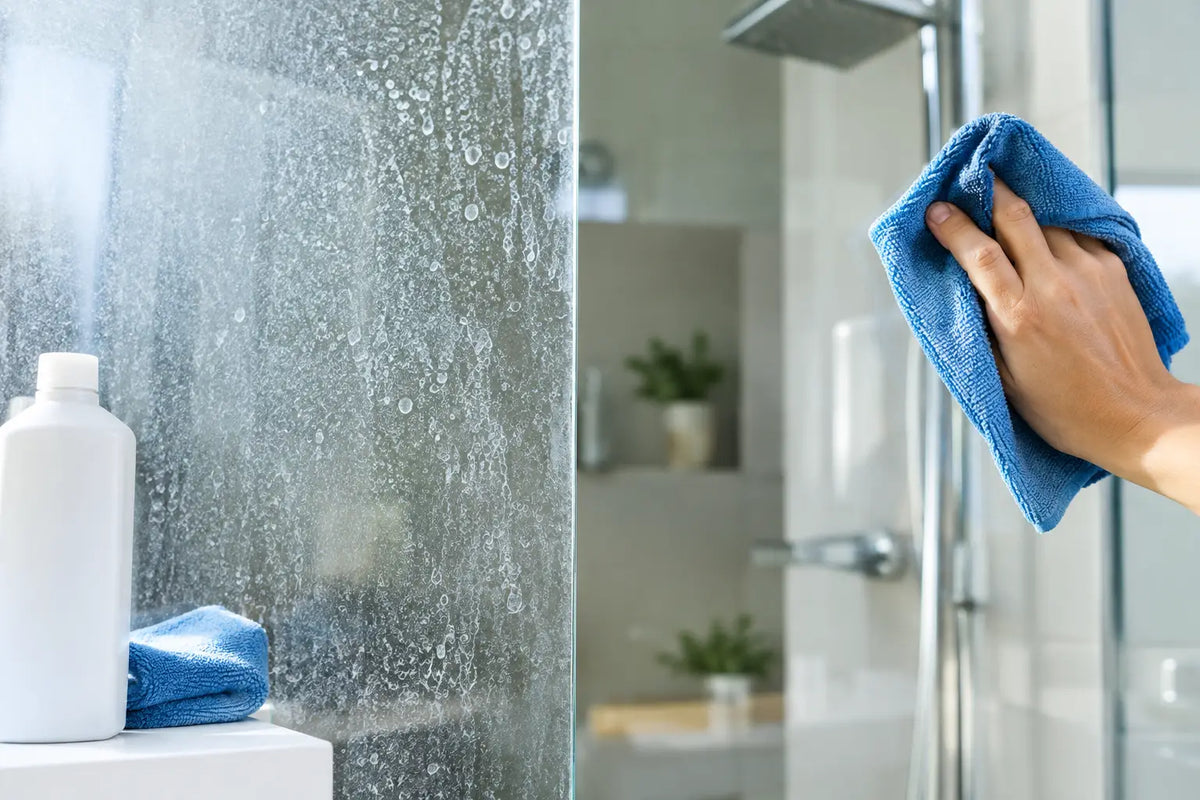
A hard water stain remover is most useful when a shower door has crossed the line from a few fresh water spots to a cloudy film that will not wipe away. That haze is not ordinary dirt. It is a mineral deposit that has dried repeatedly on the surface, often alongside soap scum and body oils. Removing it calls for a targeted approach, not more force, harsher household chemicals, or another cycle of scrubbing that leaves the glass looking unchanged.
For homeowners, the goal is bigger than getting a shower door clean for one day. The right restoration and protection routine can return clarity to glass, reduce the work required each week, and help prevent the next round of stubborn buildup.
Why Hard Water Stains Become So Difficult to Remove
Hard water contains dissolved minerals, commonly calcium and magnesium. When water evaporates from a shower door, mirror, tile, or faucet, those minerals stay behind. One shower may leave barely visible spots. Hundreds of showers can create a chalky white, gray, or cloudy layer that catches light and makes a clean bathroom look neglected.
Heat, humidity, and soap make the problem more complicated. Soap scum can bind to mineral residue, creating a mixed film that resists standard glass cleaner. On shower glass, mineral deposits may settle into microscopic irregularities in the surface. Glass looks perfectly smooth, but it is not completely nonporous at a microscopic level. Those tiny surface features give contaminants places to cling.
This is why a paper towel and conventional cleaner may remove fingerprints yet leave spotting behind. It is also why hard water stains often seem to return immediately: the underlying surface is clean enough to look better, but still unprotected and exposed to the same mineral-rich water every day.
What a Hard Water Stain Remover Should Do
A quality hard water stain remover is designed to break down mineral buildup and loosen the residue from the surface without turning cleaning into a damaging abrasion project. It should address the stain itself rather than simply coating the haze with temporary shine.
The best choice depends on the surface and the severity of buildup. Light, recent spotting on glass may respond quickly to a purpose-made remover and a non-scratch applicator. Older shower-door stains may need more contact time and several controlled passes. Tile, grout, stainless steel, and vehicle glass can each have different cleaning needs, so it is wise to confirm that the product is appropriate for the material before starting.
A remover also needs to fit into a safe process. Highly abrasive pads, razor blades, and improvised acid mixtures can create problems that look worse than the original spotting. Abrasion can scratch glass or damage surrounding finishes. Strong acids may discolor metal trim, affect natural stone, or create unpleasant fumes in an enclosed bathroom. A professional-grade surface-care product paired with proper instructions is usually a more predictable choice.
Clean First, Then Decide Whether the Surface Needs Restoration
Before treating stains, rinse loose debris from the surface and remove routine soil with a suitable cleaner. This simple step matters because dust, sand, and gritty residue can scratch when rubbed across wet glass. Work on a cool surface when possible, especially on vehicle glass or sun-exposed windows, so the product does not dry before it has time to work.
Apply the hard water stain remover according to its directions and work in manageable sections. Let the chemistry do its job. Excess pressure is rarely a substitute for adequate dwell time. Use a clean, non-abrasive applicator, then rinse thoroughly and inspect the glass while it is still wet. Remaining haze may indicate layered mineral buildup that requires another treatment rather than harder scrubbing.
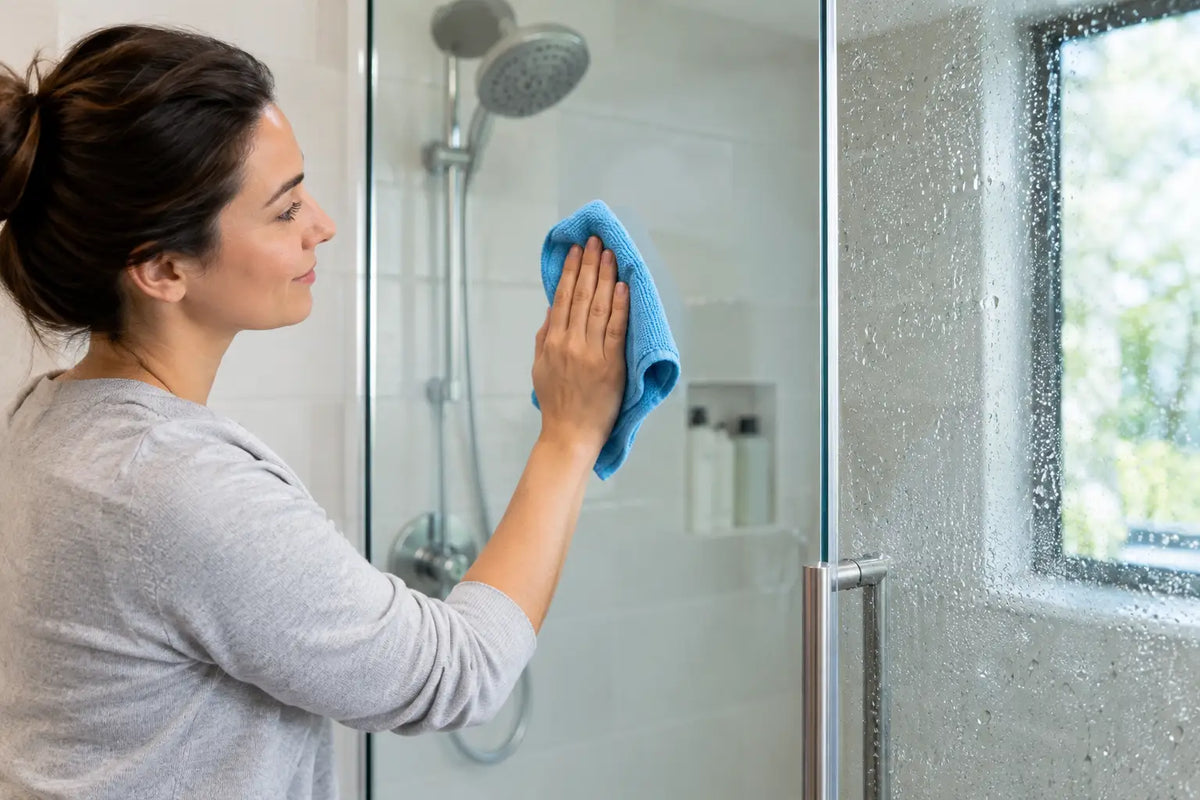
Drying the surface with a clean microfiber towel gives a more honest result. Water can temporarily hide remaining deposits, while a dry pane reveals whether the original clarity has returned. If the glass still looks permanently cloudy after careful treatment, the issue may be etched or damaged glass rather than removable mineral residue. A stain remover can lift deposits, but it cannot always reverse physical changes to the surface caused by long-term exposure or improper cleaning.
The Missing Step: Protecting Glass After Stain Removal
Restoration solves the immediate problem. Protection changes the maintenance routine that follows.
Once glass is thoroughly clean and dry, a protective coating can chemically bond with the silica-based surface. Rather than sitting on top like a short-lived spray, a properly applied coating forms an ultra-thin barrier that helps make the surface hydrophobic. Water is more likely to bead and sheet away, carrying less residue into the microscopic areas where spots begin.
That does not mean a coated shower door never needs cleaning. It means cleaning is typically faster and less chemical-intensive because minerals, soap scum, and water residue have a harder time gaining a foothold. For a busy household, that difference is practical: fewer deep-cleaning sessions, less aggressive scrubbing, and a clearer bathroom between regular maintenance days.
Protection is especially worthwhile for shower doors because they see constant wetting and drying. It can also make sense for bathroom mirrors near steamy showers, exterior glass exposed to sprinklers, vehicle windshields, and solar panels where mineral deposits can affect appearance and, in some cases, surface performance. The right treatment system depends on the material and its exposure, but the strategy remains the same: restore the surface first, then make it easier to keep clean.
A Maintenance Routine That Prevents Heavy Buildup
The simplest habit is to remove excess water after using the shower. A quick pass with a squeegee takes far less time than treating months of mineral accumulation. It will not replace a protective coating, but it reduces the amount of water left behind to evaporate.
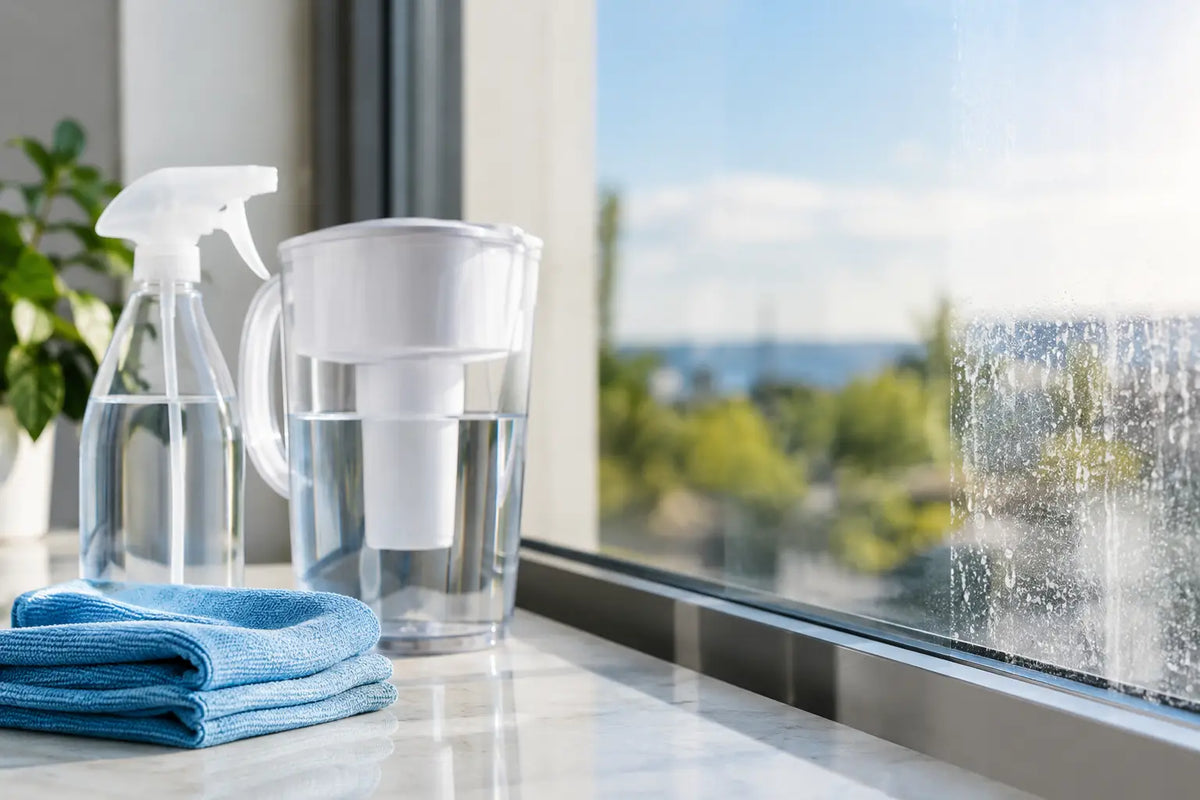
Use a mild maintenance cleaner for routine care instead of waiting for visible haze. Avoid products that leave heavy residues, since those residues can combine with minerals and make the surface look streaky. Keep separate microfiber towels for glass and other bathroom surfaces so oils, polish, or cleaning residue are not transferred back onto the door.
Water hardness also affects how often you need to intervene. A home with very hard water may require more frequent maintenance than one with moderately hard water, even when both shower doors are coated. If the source is a sprinkler system hitting an exterior window or a vehicle, adjusting the exposure can be just as valuable as changing the cleaning product.
For homeowners who want a complete approach, ShopDFI positions surface care as a system: remove existing contamination, prepare the surface correctly, apply durable protection, and maintain it with minimal effort. That sequence is more effective than relying on a new cleaner every time water spots reappear.
When DIY Cleaning Is Not Enough
Some surfaces need a closer assessment. If glass has rainbow-like marks, deep white cloudiness, scratches, or a rough texture that remains after proper cleaning, deposits may have progressed beyond a simple surface film. In those cases, continuing to scrub can increase the risk of damage.
Likewise, be cautious around natural stone, unsealed grout, painted trim, specialty glass coatings, and metal hardware. A product that works well on clear shower glass may not be appropriate for every adjacent material. Test a small, inconspicuous area when directions allow, protect nearby finishes, and do not mix cleaning chemicals.
The most satisfying result is not just a shower door that looks clear after an afternoon of work. It is a surface that stays clearer with a quick squeegee, a mild cleaner, and far less effort than it took to restore it the first time.

Leave a comment
This site is protected by hCaptcha and the hCaptcha Privacy Policy and Terms of Service apply.