

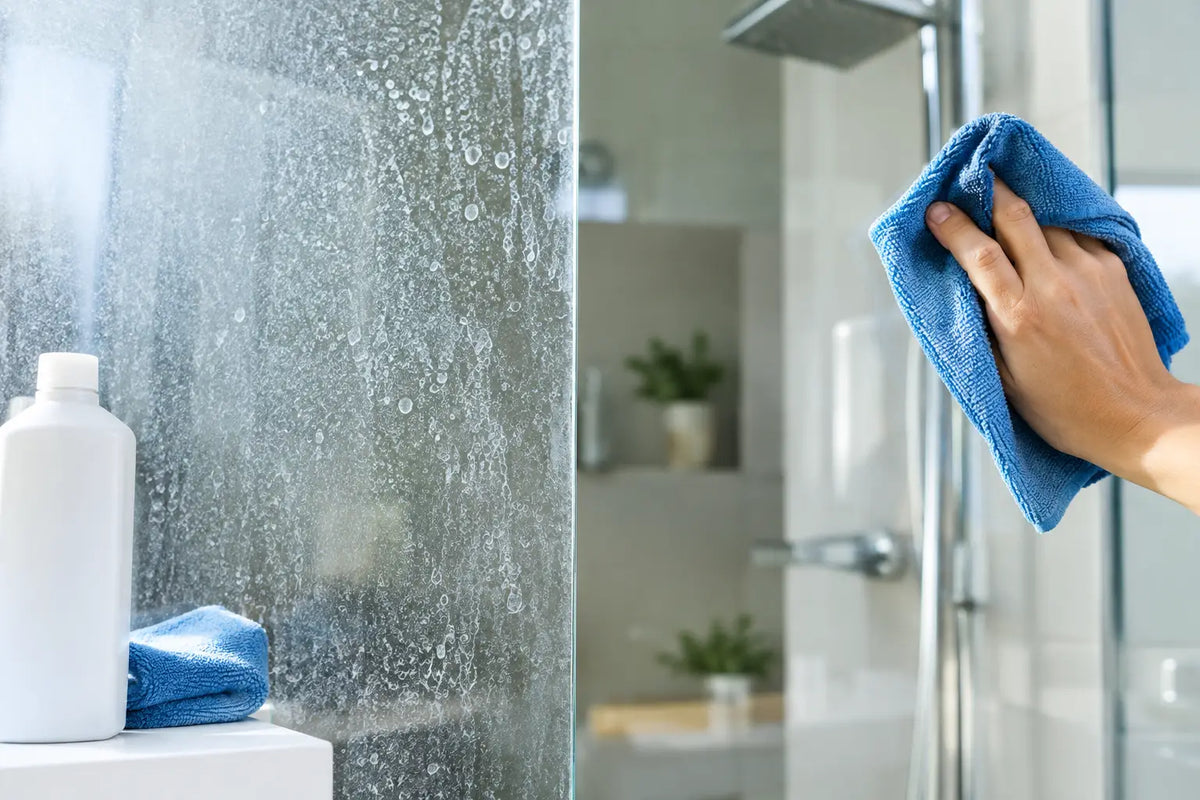
A shower door can look clean when you leave the bathroom and cloudy again by the next morning. That is the frustrating pattern a smart hardwater prevention guide is meant to break. Rather than repeatedly scrubbing away mineral residue after it dries, the goal is to keep water from clinging to vulnerable surfaces in the first place.
Hard water is not dirty water. It simply contains dissolved minerals, commonly calcium and magnesium. When water evaporates from glass, tile, chrome, or a windshield, those minerals remain behind. Over time, the deposits can create white spots, dull haze, rough texture, and stubborn stains that ordinary cleaning products may not remove.
Why Hard-Water Spots Keep Coming Back
Glass looks smooth, but it is microscopically porous. Water, soap residue, body oils, and airborne contaminants can settle into tiny surface irregularities. In a shower, heat and humidity accelerate the problem: droplets sit on the glass, evaporate, and leave minerals behind. Soap scum then gives those deposits something extra to cling to.
This is why a quick spray cleaner may restore shine without solving the underlying maintenance problem. Cleaning removes existing contamination. Prevention changes how the surface interacts with water and makes future residue easier to remove before it becomes visible buildup.
The same principle applies beyond shower doors. Bathroom mirrors collect spots from splashing and steam. Tile and grout can hold mineral residue in textured areas. Windshields pick up hard-water spotting from sprinklers, rain runoff, and washing. Solar panels and exterior glass face similar risks, especially where irrigation overspray is common.
A Hardwater Prevention Guide That Starts With the Surface
The most effective routine has three parts: remove existing buildup, protect the clean surface, and maintain it with simple habits. Skipping the first step is where many treatments disappoint. A protective coating cannot make embedded mineral deposits disappear, and applying protection over soap scum can leave the surface looking uneven.
Remove Mineral Deposits Before They Etch
Start by identifying what is on the surface. Fresh spots often respond to a non-abrasive hard-water stain remover and a soft microfiber towel or suitable applicator. Older deposits may need more patience and repeated treatment. Avoid harsh scouring pads, razor blades, and aggressive abrasives unless the surface manufacturer specifically allows them. They can scratch glass, damage finishes, or create more places for residue to collect.
If a shower door stays cloudy after cleaning, the issue may be etching rather than surface residue. Minerals left in place for extended periods can chemically affect glass, especially under repeated heat and moisture. Cleaning can improve the appearance, but it may not fully reverse permanent damage. That is a strong reason to shift from reactive stain removal to consistent prevention.
For vehicle glass, use products intended for automotive applications and avoid anything that can affect surrounding paint, trim, or wiper performance. On tile, test a small inconspicuous area first, particularly with natural stone or specialty finishes. The right cleaning method depends on the substrate, not just the stain.
Add a Hydrophobic Protective Barrier
Once the surface is clean and completely dry, a quality protective coating can provide the most meaningful long-term improvement. Unlike temporary shine products that sit on top of glass, a professional-grade coating can chemically bond with silica-based surfaces. It creates an ultra-thin hydrophobic barrier that changes the way water behaves.
Instead of spreading into a sheet and drying across the glass, water beads and releases more readily. Less water remains on the surface, which means fewer minerals are left behind after evaporation. Soap scum and everyday grime also have less opportunity to anchor to the glass.
The benefit is not that a protected shower door never needs cleaning. It is that cleaning becomes faster, gentler, and less frequent. Most homeowners notice the difference in the time saved after each shower: fewer stubborn spots, less elbow grease, and clearer glass that holds its appearance longer.
Application matters. Follow the coating instructions closely, including surface preparation, dry time, ventilation, and curing requirements. Rushing the process or applying over residue reduces performance. A properly prepared surface gives the coating the best chance to bond and deliver durable water repellency.
Daily Habits That Reduce Mineral Buildup
A coating does the heavy lifting, but a few low-effort habits can extend its performance. After showering, use a clean squeegee to remove excess water from the glass. It takes less than a minute and prevents many droplets from drying in place. Wipe the bottom edge, hardware, and tracks as well, since these areas collect standing water and soap residue.
Ventilation also matters. Run the bath fan during and after a shower, or open a window when practical. Lower humidity helps the room dry more quickly, reducing the wet environment that encourages soap scum and mineral film.
Use a mild, non-abrasive cleaner for routine maintenance rather than reaching immediately for harsh chemicals. Strong acids, gritty powders, and abrasive tools may be appropriate for specific restoration jobs, but they are not ideal as a daily strategy. A protected surface should need light maintenance, not repeated punishment.
In kitchens and on bathroom fixtures, wipe splashes before they dry. For windshields, avoid parking where sprinklers regularly hit the vehicle. If that is unavoidable, rinse the glass with clean water and dry it promptly. Prevention is often less about a single product and more about stopping mineral-rich water from sitting undisturbed.
Address the Water Source When It Makes Sense
A whole-home water softener can reduce calcium and magnesium in the water supply, which may lower mineral buildup throughout the house. It can be a worthwhile investment for households with very hard water, frequent appliance scale, dry skin concerns, or recurring fixture stains.
Still, a water softener is not the only answer. It does not prevent soap residue, environmental contaminants, or water from drying on glass. It also may not affect sprinkler water supplied by a separate outdoor system. Surface protection and simple drying habits remain useful, whether or not your home has softened water.
For renters or homeowners who do not want to change plumbing, treating the surfaces themselves is often the more direct and affordable route. It addresses the places where hard-water stains are most visible: shower doors, mirrors, tile, and glass fixtures.
Common Mistakes That Shorten Results
The biggest mistake is waiting until deposits become opaque before taking action. Once mineral stains bake onto glass for months or years, restoration takes more time and may not return the surface to its original clarity.
Another common issue is using household remedies indiscriminately. Vinegar can help with light mineral residue on some surfaces, but it is not a universal solution. Its acidity can be unsuitable for natural stone, certain metals, grout, and specialty coatings. It also does not create lasting water repellency. A cleaner handles the current mess; a protective treatment helps reduce the next one.
Finally, do not confuse water beading with a permanent cure. Hydrophobic performance gradually changes with use, cleaning practices, and surface exposure. Reapply a protective treatment according to its directions, and keep maintenance gentle so you do not wear down the barrier prematurely.
Make Clear Glass the Easier Standard
The best hard-water strategy is the one you can maintain without turning every shower or windshield into a weekend cleaning project. Clean deposits early, protect fully prepared surfaces with a coating designed to chemically bond, and remove standing water before it dries. ShopDFI’s approach centers on that durable system: less residue to fight, fewer harsh chemicals to reach for, and more time enjoying surfaces that stay clear with minimal effort.
A spotless surface is not about cleaning more often. It is about giving water fewer chances to leave its mark.

Leave a comment
This site is protected by hCaptcha and the hCaptcha Privacy Policy and Terms of Service apply.