

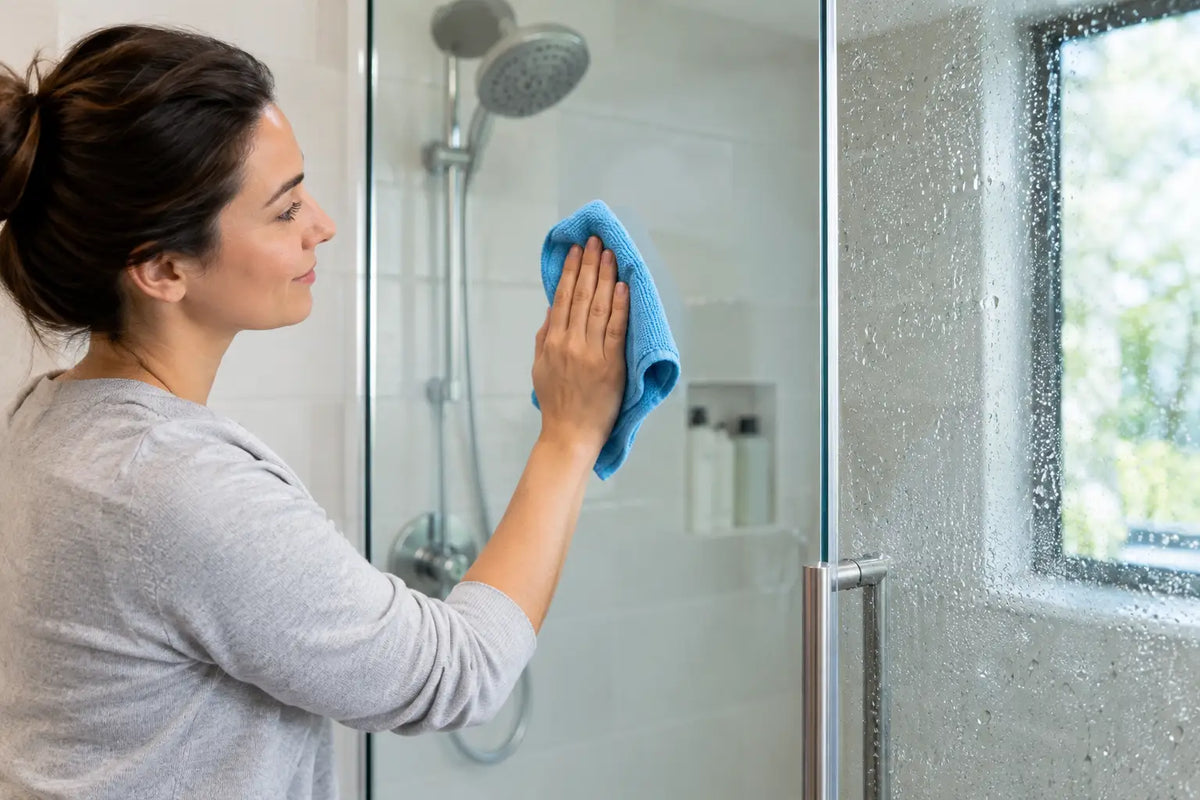
A shower door protective coating can change the part of bathroom cleaning most homeowners dread: trying to scrub cloudy mineral deposits from glass that looked clean only a few days earlier. The right treatment does not make a shower door maintenance-free, but it gives water, soap residue, and minerals far less opportunity to cling to the surface. That means clearer glass, fewer stubborn stains, and a faster routine between deep cleans.
The difference comes down to whether you are simply cleaning the glass or protecting it. Cleaners remove existing buildup. A quality protective coating helps prevent new buildup from gaining a foothold in the first place.
Why Shower Glass Gets Cloudy So Quickly
Shower door glass may feel smooth, but at a microscopic level it is porous. Those tiny surface irregularities can hold onto minerals from hard water, body oils, soap scum, and residue from shampoos and conditioners. As water dries, dissolved calcium, magnesium, and other minerals remain behind. Repeat that process often enough and the glass develops dull spots, white haze, or etched-looking stains.
Hard water is a major factor, but it is not the only one. A household with softened water can still see film from soap and personal-care products. Ventilation, how often the shower is used, and whether water is wiped from the glass all affect how quickly residue appears.
This is why a standard glass cleaner may create a short-lived shine without solving the recurring problem. It can remove surface soil, yet it does not alter the glass itself. If the glass remains exposed and porous, the next shower begins the buildup cycle again.
How a Shower Door Protective Coating Works
A true shower door protective coating is designed to chemically bond with silica-based glass. Rather than sitting on top like a temporary polish, it creates an ultra-thin barrier that changes how water behaves on the surface. The treated glass becomes more hydrophobic, so water tends to bead and release more easily instead of spreading, drying, and leaving minerals behind.
That barrier also makes it harder for soap scum and grime to attach. The result is not that contaminants disappear from the bathroom. It is that they are easier to rinse away or remove with gentle, routine care before they become a difficult restoration job.
The distinction between chemical bonding and a topical product matters. Some consumer sprays produce noticeable water beading at first, but the effect can fade quickly with heat, moisture, abrasive cleaning, and daily shower use. A professionally formulated coating that bonds with the glass is intended to provide more durable protection when it is applied to a properly prepared surface and maintained as directed.
What Results Should You Expect?
The most visible benefit is usually clearer glass with less frequent heavy cleaning. Water spots may still appear, especially in areas with very hard water, but they are typically less likely to become firmly attached mineral deposits. Many homeowners also find that a quick rinse, squeegee, or wipe-down is enough to keep the door looking presentable between regular cleanings.
A coating can help reduce:
- Water spotting and mineral residue
- Soap-scum adhesion and bathroom film
- The time spent scrubbing shower glass
- Reliance on harsh, acidic, or abrasive cleaners
- The chance that neglected buildup becomes difficult to remove
Preparation Determines the Outcome
Applying a coating over existing hard-water stains is one of the most common mistakes. Any residue left on the glass can interfere with the bond and remain visible beneath the treatment. The glass should be thoroughly cleaned and restored before the protective step begins.
Start by removing soap film, mineral deposits, and any residue from prior cleaners. For stubborn hard-water staining, use a product formulated for glass restoration rather than reaching immediately for an abrasive pad or harsh household acid. Scratching the glass or damaging surrounding metal finishes can create a much bigger problem than the original spots.
Once the glass is clean, rinse away all cleaner residue and dry it completely. The surface should be cool and free of lint, oils, and moisture. Follow the coating manufacturer's instructions precisely, including the recommended amount, application pattern, cure time, and any final buffing step. Protective technology is only as effective as the surface preparation behind it.
For older shower doors with deep etching, a coating can still improve cleanability and appearance, but it cannot reverse physical damage already embedded in the glass. Restoration may reduce the look of mineral staining, while protection helps keep the newly cleaned surface from quickly returning to the same condition.
Coating, Squeegee, or Daily Cleaner?
These options are not necessarily competitors. They serve different roles. A squeegee physically removes water after each shower, which is highly effective but depends on someone using it consistently. A daily cleaner can help loosen fresh residue, though some formulas leave their own film or require frequent reapplication.
A protective coating works at the surface level. It reduces how strongly water and grime adhere, making the squeegee more effective and reducing the effort required when cleaning is needed. For busy households, that can be the practical advantage: the shower door stays easier to manage even when a daily wipe-down gets skipped.
The best system is usually straightforward. Begin with clean, restored glass. Apply a rigorously tested hydrophobic coating. Then maintain it with gentle products and occasional rinsing or wiping. This approach replaces the cycle of waiting for visible buildup, attacking it with aggressive cleaners, and repeating the process a few weeks later.
Maintenance That Protects the Protection
Once the glass has been treated, avoid undoing the benefit with the wrong maintenance products. Harsh abrasives, steel wool, scouring powders, and highly aggressive chemicals can damage glass, compromise the coating, or affect nearby hardware and seals. They may remove a stain in the moment while creating conditions for faster future buildup.
Use a non-abrasive cloth, soft sponge, or squeegee for regular care. Clean the tracks, hinges, and seals as well, since trapped moisture and grime around the edges can make an otherwise clear shower door look neglected. If your water is especially hard, wiping the glass after use remains worthwhile, but it should take seconds rather than a prolonged scrubbing session.
Reapplication timing depends on the product, water conditions, cleaning habits, and shower use. If water stops releasing as easily, residue begins to cling more noticeably, or the glass no longer cleans up with minimal effort, it may be time to refresh the treatment. Treating protection as an occasional maintenance step is more realistic than assuming one application will last forever under every condition.
Is a Protective Coating Worth It?
For a guest bathroom used occasionally, the return may be mostly cosmetic. For a primary shower used by multiple people every day, the payoff is often more substantial. The coating helps protect a highly visible surface from the buildup that makes an otherwise clean bathroom look unfinished.
It can also make sense when installing new shower glass. Protecting a new door before hard-water stains have time to develop is easier than restoring neglected glass later. Homeowners dealing with existing buildup should focus first on cleaning and restoration, then apply protection to preserve that work.
ShopDFI approaches shower glass care as a system: remove the existing contaminants, create a durable hydrophobic barrier, and maintain the surface with products that support rather than strip that protection. This reduces the need to rely on harsh chemical cleaning every time the glass starts to look cloudy.
A clear shower door should not require a weekend scrub to stay that way. Start with clean glass, choose a coating designed to chemically bond, and make light maintenance part of the routine. The result is a bathroom surface that looks polished with far less effort.

Leave a comment
This site is protected by hCaptcha and the hCaptcha Privacy Policy and Terms of Service apply.