

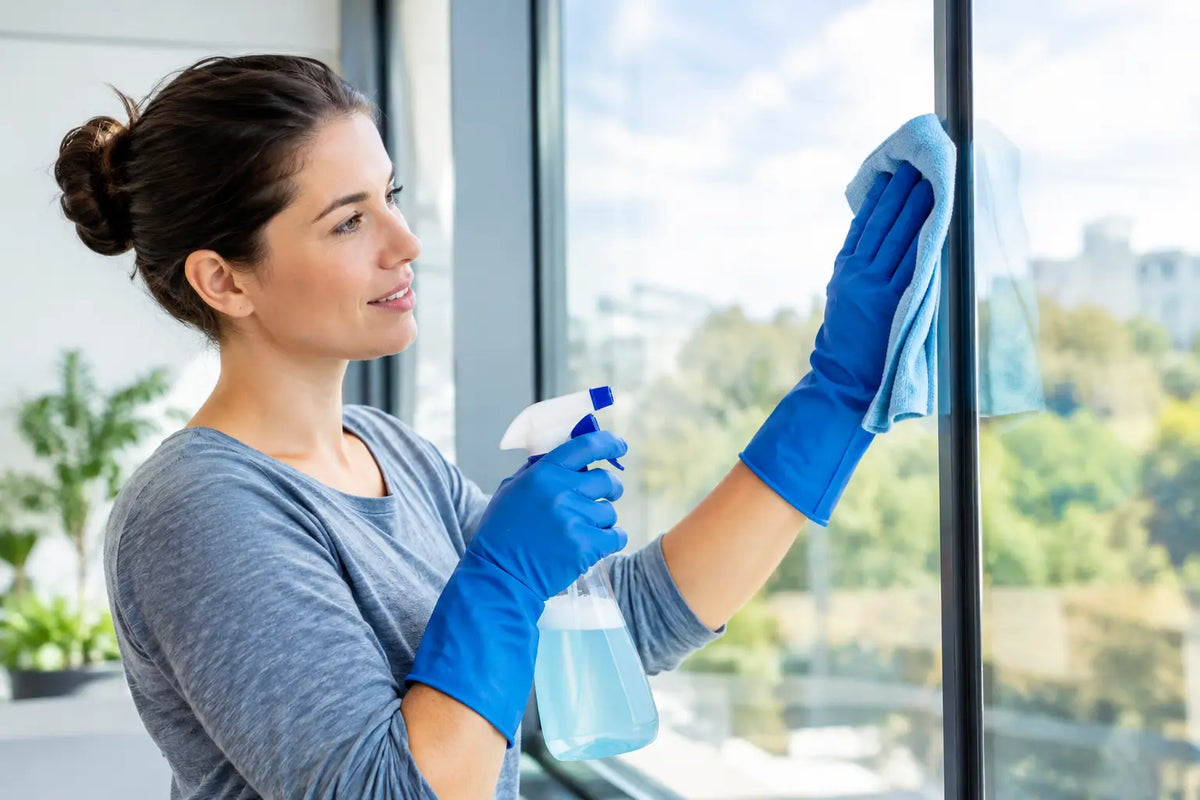
A coated shower door should not need aggressive scrubbing to look clear. If water beads, soap residue releases more easily, and the glass dries with fewer spots, the protective treatment is doing its job. Choosing a safe cleaner for coated glass helps preserve that easy-clean performance instead of slowly working against it.
The catch is that not every cleaner labeled for glass is a good match for coated glass. Some formulas are designed to cut through heavy buildup with strong acids, abrasives, or solvents. They may make untreated glass look better in the short term, but frequent use can leave a coating less effective, create haze, or force you back into the same cleaning cycle the treatment was meant to reduce.
Why coated glass needs a different cleaning approach
Glass may feel perfectly smooth, but at a microscopic level it has tiny pores and irregularities. Water minerals, soap scum, body oils, and cleaning residue can settle into those areas and make a shower door look cloudy or spotted.
A professional-quality protective coating chemically bonds to the glass and forms an ultra-thin hydrophobic barrier. Rather than sitting on top like a temporary wax, that barrier helps water sheet away or bead up, limiting the opportunity for mineral deposits and soap residue to cling to the surface.
That does not mean coated glass never needs cleaning. It means maintenance can be gentler and faster. The goal is no longer to overpower buildup with harsh chemistry. It is to remove the light residue that remains before it has time to become a stain.
What makes a cleaner safe for coated glass?
The best cleaner is generally non-abrasive, low-residue, and made for routine maintenance. It should lift body oils, light soap film, and everyday water spotting without leaving behind a slippery film that attracts more soil or interferes with water repellency.
A pH-neutral formula is often a smart choice for regular cleaning, particularly for shower doors, mirrors, and treated tile. These cleaners are less likely to be unnecessarily harsh on surrounding materials such as metal hardware, grout, stone, and caulk. They are also more suitable for the frequent, light cleaning that keeps deposits from becoming difficult to remove.
Look beyond the word “glass” on the label. A streak-free window spray may work well for fingerprints on an interior mirror, yet it may not be the best option for a shower enclosure if it leaves surfactant residue behind. Likewise, a product made to remove hard-water stains may be useful as an occasional corrective treatment, but it is not necessarily the right daily cleaner.
For dependable results, use a cleaner that is specifically intended for treated or protected surfaces when available. ShopDFI maintenance products are designed to support the easy-clean benefits of protected glass rather than replace the coating with temporary shine.
Cleaners and tools to use with care
The biggest risk is usually not one accidental use of the wrong product. It is a repeated routine of harsh chemicals and aggressive pads. Avoid making abrasive powders, scouring creams, rough scrub pads, steel wool, and razor blades part of regular coated-glass maintenance. They can scratch glass, dull its appearance, and damage the surface performance you are trying to preserve.
Use caution with highly acidic mineral removers, strong alkaline degreasers, chlorine bleach, and solvent-heavy products. There are situations where a targeted restoration product is appropriate, especially when hard-water deposits have already formed. But that is a different job from normal maintenance. Follow the product directions, test a small area first, and do not assume “stronger” means “better.”
The cleaning tool matters, too. A clean microfiber towel, soft sponge, or non-abrasive cloth is typically enough for coated glass. Dirty towels can drag mineral grit across the surface, while fabric softener residue on laundry-washed microfiber can cause streaking. Keep dedicated glass cloths clean, dry, and free of lint.
How to clean coated glass without stripping its easy-clean benefits
Start with a simple routine after each shower or use. Rinse away shampoo, soap, and loose residue with clean water, then use a soft squeegee or microfiber towel to remove standing droplets. This takes less than a minute and significantly reduces the mineral residue left behind as water dries.
For weekly maintenance, spray the cleaner onto a microfiber cloth or directly onto the cool glass according to the product directions. Wipe from top to bottom using light, overlapping passes. Then buff dry with a second clean microfiber towel if needed. Drying is not just for appearance. It prevents dissolved minerals from drying into visible spots.
Avoid cleaning hot glass or working in direct sun when possible. Heat can make a cleaner evaporate before you wipe it away, increasing the chance of streaks. In a shower, ventilation also helps. Running the exhaust fan and leaving the door open after use gives moisture less time to settle on the surface.
A treated windshield follows the same principle, although road film is different from soap scum. Use a windshield-safe cleaner and a clean microfiber towel. Do not use abrasive household pads to remove bug residue or road grime. If contamination is persistent, identify the source before escalating to a stronger product. Tree sap, overspray, and embedded mineral spotting each require a different solution.
When a routine cleaner is not enough
A safe maintenance cleaner will not erase years of hard-water scale in one pass, nor should it be expected to. White, chalky deposits, cloudy etched areas, and stubborn soap scum may call for a dedicated stain-removal or restoration process.
First, determine whether you are seeing surface contamination or actual glass damage. Mineral deposits often feel rough or look white around the lower edges of shower doors. They may respond to a coating-compatible hard-water stain remover. Etching is different. When minerals remain on glass for long periods, they can alter the surface itself, creating dull spots that do not wipe away easily.
If the water-repellent effect seems weaker, do not immediately assume the coating is gone. Soap film, hard-water residue, and oils can mask a hydrophobic surface. Clean the glass thoroughly with the appropriate maintenance or restoration product, rinse well, and dry it completely before judging performance. If the coating has reached the end of its service life, prepare the surface correctly before applying a new treatment.
Common mistakes that create more work
Many coated-glass problems begin with good intentions: spraying a heavy-duty bathroom cleaner every day, scrubbing harder when spots appear, or mixing household products in search of a faster result. These habits can leave residue, affect nearby finishes, and create unnecessary exposure to harsh chemicals.
Another common mistake is applying a fresh protective coating over dirty glass. A coating needs a clean, contamination-free surface to chemically bond correctly. If mineral film or soap scum remains underneath, the result may look uneven and the protective layer may not perform as intended.
Finally, do not confuse a coating with a force field. It reduces adhesion and makes cleaning easier, but regular care still matters. A home with very hard water, a busy family shower, or poor bathroom ventilation may need more frequent wipe-downs than a lightly used guest bath. The right schedule depends on how quickly residue forms, not on a fixed calendar rule.
A simple system delivers the best results
Coated glass performs best when cleaning and protection work together. Use a gentle cleaner for routine care, soft tools for wiping, and a squeegee or microfiber towel to reduce standing water. Reserve stronger stain-removal products for true buildup, and follow the directions closely.
That approach protects more than the appearance of the glass. It reduces cleaning labor, limits the need for harsh chemicals, and helps the hydrophobic barrier continue doing what it was designed to do: keep everyday water, soap, and mineral residue from taking over your shower door, mirror, or windshield.
The most effective cleaning routine is the one you can repeat with minimal effort. When coated glass is maintained with compatible products and a few consistent habits, clear, polished surfaces stop being a weekend project and become the expected result.

Leave a comment
This site is protected by hCaptcha and the hCaptcha Privacy Policy and Terms of Service apply.