

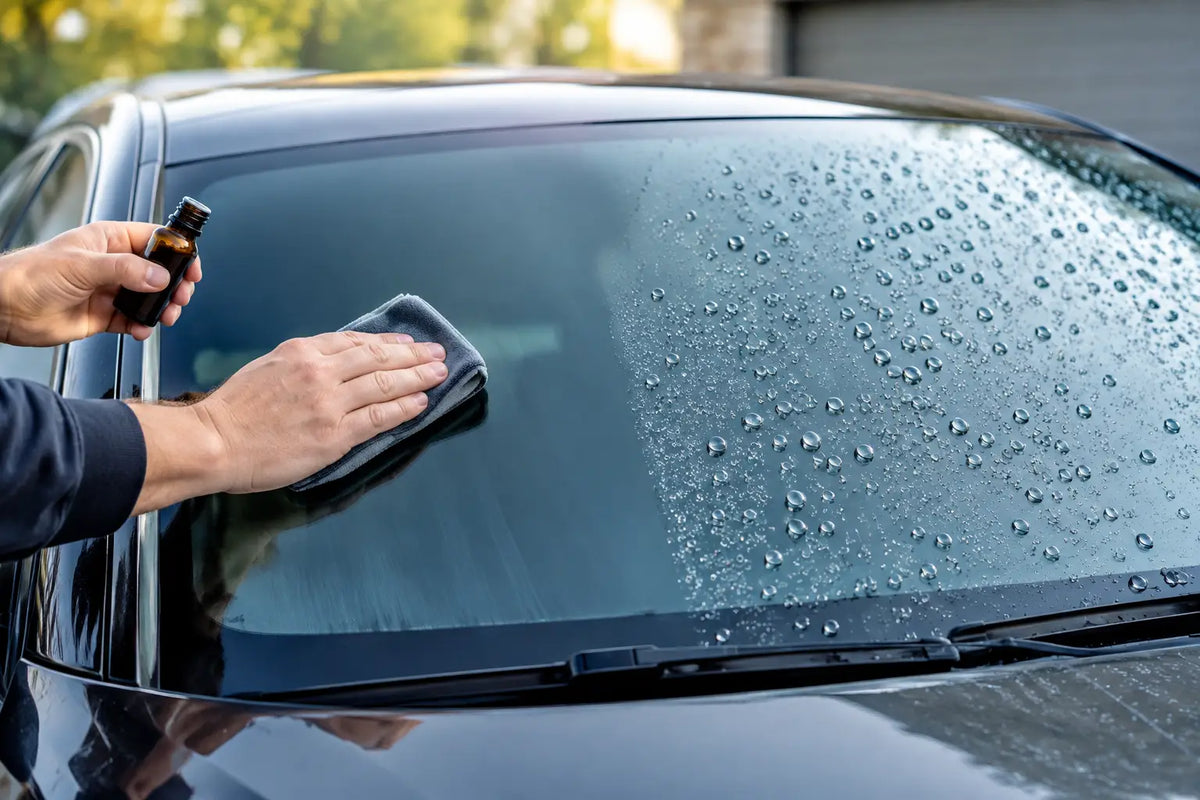
Rain should roll off a windshield, not settle into a blurry sheet that makes every headlight flare feel harsher. A DIY windshield hydrophobic coating helps water bead and move across exterior glass, improving the driver’s view in wet conditions while reducing the grime and mineral residue that make windshields look hazy. The result is not magic, and it is not a replacement for safe wipers or attentive driving. It is a practical surface-care upgrade when it is applied to properly prepared glass.
What a hydrophobic windshield coating actually does
Windshield glass looks smooth, but at a microscopic level it contains tiny surface irregularities where road film, mineral deposits, oily residue, and environmental contaminants can cling. A quality protective coating is designed to chemically bond with the glass and create an ultra-thin hydrophobic barrier. That barrier changes how water behaves on the surface.
Instead of spreading into a flat film, rain forms rounded beads that can shed more readily as air moves over the windshield. At driving speed, this effect can reduce the amount of water your wipers need to clear. It can also make bug residue, dust, and road grime easier to remove during routine cleaning.
The distinction matters: a hydrophobic coating is not simply a cleaner that leaves temporary shine behind. Cleaners remove contamination. Protective coatings are intended to alter the surface after it has been cleaned, making future maintenance easier. Durability depends on the coating chemistry, the preparation work, local weather, wiper use, and how the vehicle is washed.
Why DIY windshield hydrophobic coating prep matters most
Most disappointing coating results begin before the applicator ever touches the windshield. If the glass still has oily film, silicone residue, hard-water minerals, wax overspray, or embedded grime, the coating is bonding to contamination rather than clean glass. Water may bead unevenly, haze may remain, and the treatment may wear prematurely.
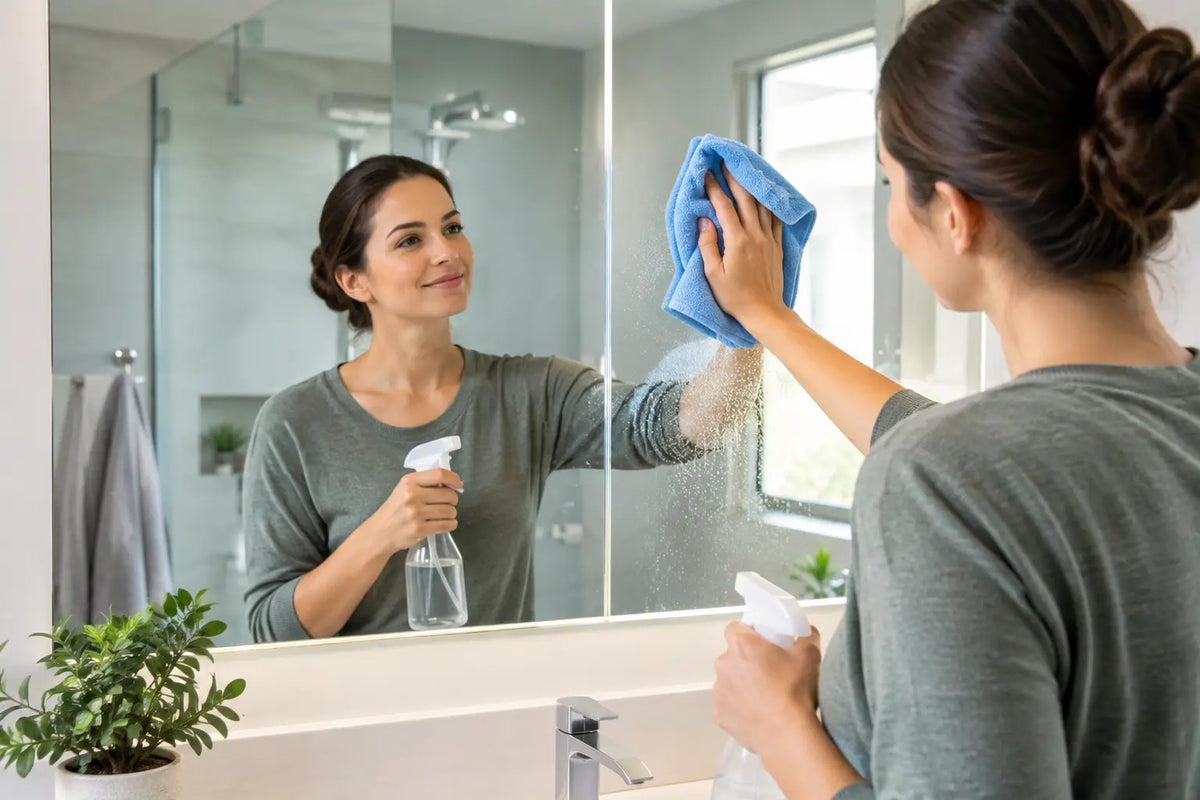
Start with a cool windshield in the shade. Direct sun can flash-dry cleaners and cause streaking, while hot glass can make an application product harder to spread evenly. Wash the exterior glass thoroughly with a glass-safe cleaner and a clean microfiber towel. Avoid household cleaners that leave fragrance, soap, or softening agents behind.
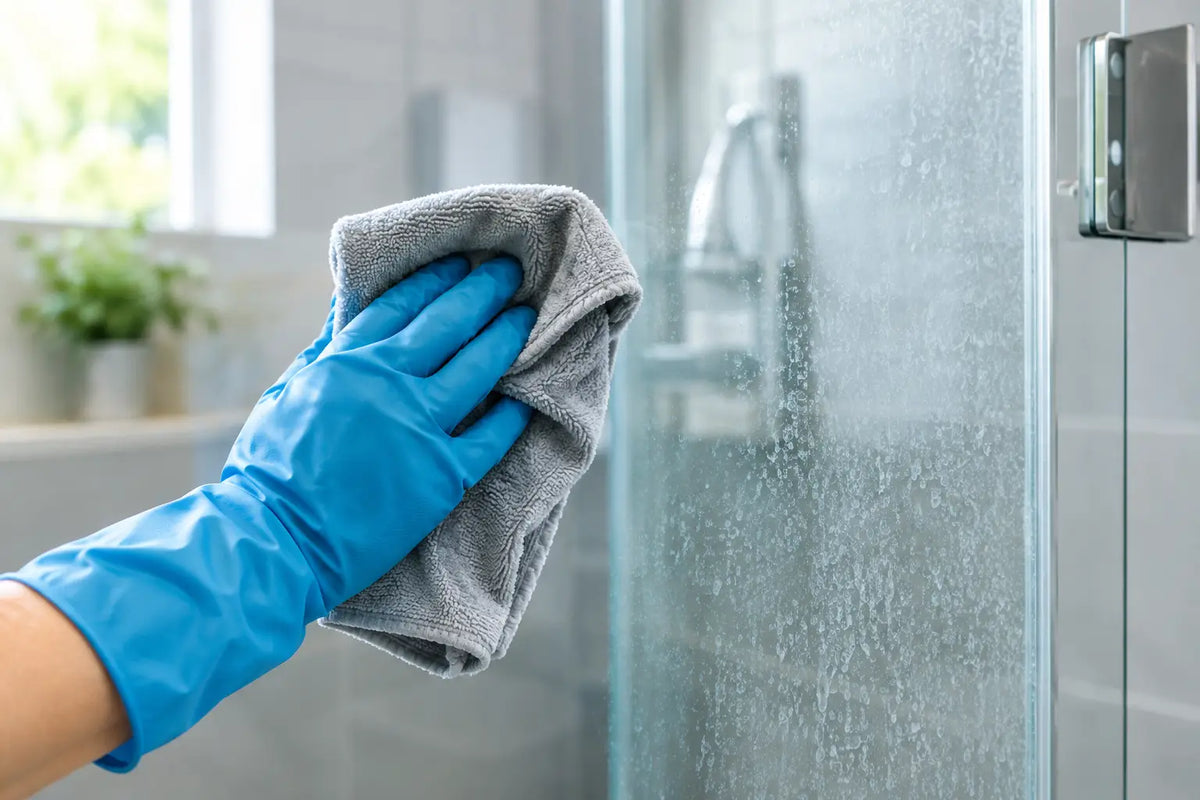
Then inspect the windshield closely. If it feels rough after cleaning, has cloudy spots, or shows stubborn water marks, it needs more than a quick wipe. Use a glass-appropriate stain remover or restoration product to address mineral buildup before coating. This step is especially useful in hard-water areas, where sprinkler overspray can etch or stain glass over time.
Finish by removing every trace of residue with a clean, lint-free microfiber. The surface should look clear and feel smooth. Do not apply a coating over an already-wet windshield, and do not assume a pass with the gas-station squeegee counts as surface preparation.
Check the wipers before you coat
Wiper blades are part of the system. Worn, torn, or contaminated blades can chatter across treated glass, leave streaks, and shorten the life of any water-repellent surface. Clean the rubber edges with a damp microfiber towel, then inspect them for cracks, hardened rubber, and uneven contact.
If the blades are overdue for replacement, replace them first. A hydrophobic coating can help water release from the glass, but it cannot correct damaged wiper rubber or a wiper arm that applies uneven pressure.
How to apply a DIY windshield hydrophobic coating
Always follow the instructions for the specific coating you select. Application methods vary, especially between quick consumer treatments and professional-grade formulas designed for longer service life. The basic process is straightforward, but rushing it is where uneven performance begins.
Apply the product in a thin, controlled layer, working in manageable sections. Overapplication does not create better protection. It can create smears or hazy patches that take extra work to level. Use the included applicator or a clean applicator pad, and overlap sections slightly so there are no missed areas.
Allow the coating to dwell or cure for the time directed on the label. Some formulas require buffing after a brief haze develops; others need a specific curing window before the windshield gets wet. Do not improvise here. A coating that chemically bonds to glass needs the right contact time to perform as intended.
Once cured, test the windshield with clean water. You are looking for consistent beading and movement across the glass, not necessarily identical behavior in every spot. The lower portion of the windshield often experiences more wiper abrasion, so it may require maintenance sooner than the upper area.
For homeowners and DIY vehicle owners, a rigorously tested windshield treatment system such as one from ShopDFI can be a better choice than viral home remedies because it is made for glass protection rather than temporary surface slickness.
What not to use on your windshield
Internet shortcuts often promise water repellency using household products, oils, waxes, or improvised mixtures. They can leave a greasy film, create glare at night, interfere with wiper movement, or attract more dirt. A windshield is not the place to experiment with products that were formulated for furniture, paint, or kitchen surfaces.
Avoid applying a glass coating over these common problems:
- Fresh wax, polish, tire dressing, or silicone overspray
- Active hard-water staining or visible etching
- Cracked or severely pitted glass that needs repair or replacement
- A windshield that is hot, wet, dusty, or exposed to direct sun
Real-world performance: what to expect in rain
A properly applied coating can make moderate rain noticeably easier to manage, particularly at road speeds where airflow helps move water upward and away. In a light shower, drivers may find that water beads and clears with less wiper use. In heavy rain, low-speed traffic, fog, or standing water spray, wipers remain essential.
This is the practical trade-off: hydrophobic performance supports visibility, but it does not change the need for safe driving habits. Keep wiper fluid filled, replace blades when they wear out, and slow down when conditions reduce visibility. No surface treatment can compensate for a storm, poor lighting, or an unsafe following distance.
Performance also varies by climate. In dry, dusty regions, the main benefit may be easier removal of road film and bugs. In humid or rainy regions, improved water behavior may be more obvious. Vehicles parked outside near sprinklers, trees, or industrial fallout may need more frequent cleaning and maintenance than garage-kept vehicles.
Maintaining the coating without stripping it
The easiest way to extend coating performance is to clean the windshield regularly with compatible products. Remove bug splatter and road film before they bake onto the glass. Use a clean microfiber towel rather than a dirty towel that drags grit across the surface.
Be cautious with aggressive abrasives and harsh chemical cleaners unless the coating manufacturer recommends them. Strong cleaners may be appropriate for restoration before treatment, but repeated use after application can reduce the hydrophobic effect. Automated car washes are another variable: brush contact, strong detergents, and wax additives can affect both the coating and the clarity of the glass.
Watch for signs that maintenance is due. Water that used to bead may begin to spread or cling. Wipers may leave more residue than usual. The windshield may feel less slick after washing. First, clean the glass thoroughly, because contamination can mask a coating that is still present. If water behavior does not improve after cleaning, follow the product directions for reapplication.
A clearer windshield starts before the rain
The best time to treat exterior glass is not when you are already driving through a downpour. Prepare the windshield on a dry day, use a coating designed to chemically bond with glass, and maintain it with the same care you give the rest of the vehicle. That small DIY step can turn routine wet-weather visibility and windshield cleaning into a less demanding part of owning a car.

Leave a comment
This site is protected by hCaptcha and the hCaptcha Privacy Policy and Terms of Service apply.