

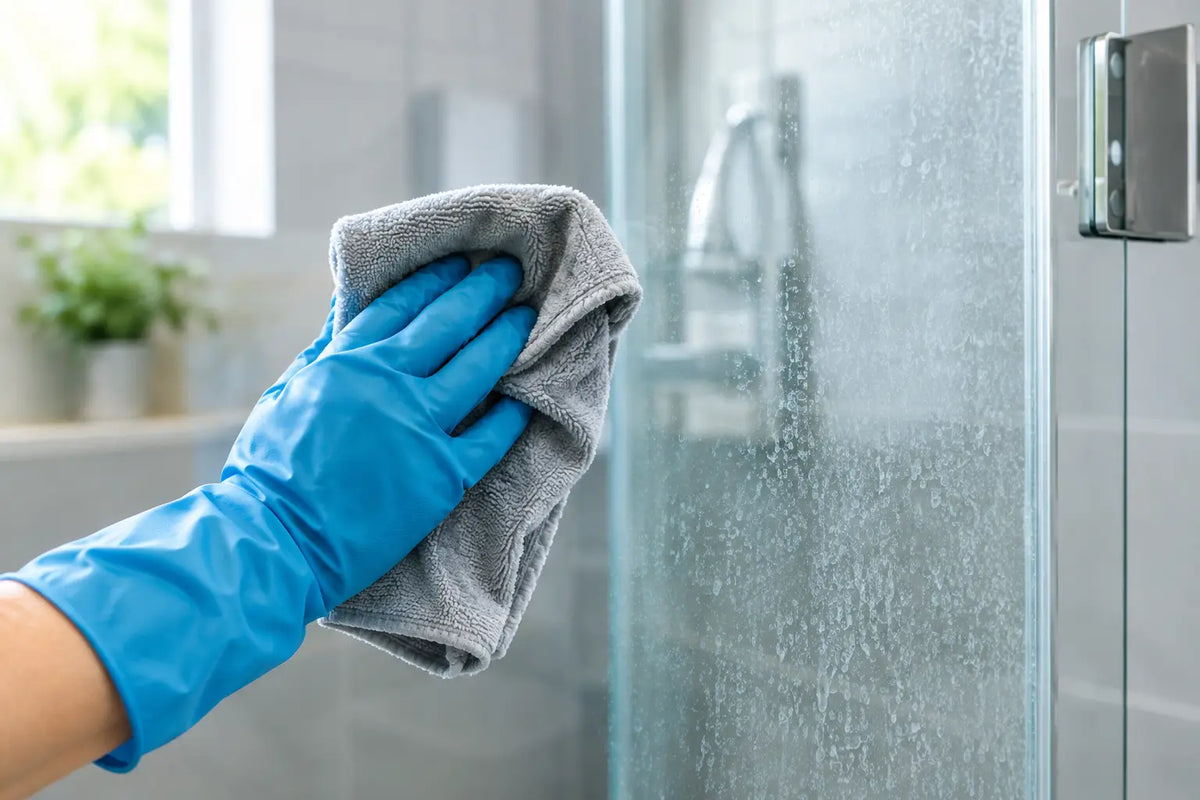
A shower door can look cloudy even after a fresh cleaning because the problem is not always dirt. When hard water dries on glass, it leaves calcium, magnesium, and other minerals behind. Over time, those deposits can bond tightly to the surface and trap soap scum around them. Knowing how to clean mineral buildup on glass means removing that residue without creating scratches, haze, or more work next week.
The right approach depends on whether you are dealing with fresh water spots, a thick white film, or permanent-looking damage from years of buildup. Start with the least aggressive method that can do the job, then protect the clean glass so water does not keep drying into new deposits.
Why Mineral Buildup Clings to Glass
Glass may feel perfectly smooth, but untreated glass has microscopic pores and surface irregularities. Minerals in hard water settle into those tiny areas as droplets evaporate. Soap, body oils, and shampoo residue can create an additional film that holds minerals in place, especially on shower doors and bathroom mirrors.
Fresh spots are usually easy to remove. Older deposits are different. Repeated wetting and drying can create a crusty, cloudy layer that resists ordinary glass cleaner. If left in place long enough, mineral residue may contribute to etching, where the glass itself becomes damaged rather than simply dirty.
That distinction matters. Deposits can be cleaned away. Etching cannot be fully cleaned because the surface has changed. A careful cleaning process helps reveal which issue you have before you reach for abrasives or harsh chemicals.
What to Avoid Before You Start
It is tempting to attack cloudy glass with a razor blade, steel wool, or a highly abrasive powder. Those shortcuts can scratch glass, damage hardware finishes, and leave coatings or seals compromised. Avoid dry scrubbing, especially when gritty mineral particles are present.
Also be cautious with acidic cleaners around natural stone, polished metal, grout, and painted surfaces. Acidic solutions can be effective on mineral deposits, but overspray or runoff may discolor nearby materials. Protect surrounding surfaces with a towel, keep the work area ventilated, and follow the cleaner's label directions.
Do not mix cleaners. Combining products, particularly acids and bleach-containing products, can create dangerous fumes. Use one product at a time, rinse thoroughly, and keep the process simple.
How to Clean Mineral Buildup on Glass Step by Step
Start by loosening surface residue
Rinse the glass with warm water to remove loose dust and body-care residue. Then apply a glass-safe hard-water stain remover or a mild acidic cleaning solution designed for mineral deposits. Let it dwell only as long as the product directions allow. The goal is to give the cleaner time to break down minerals, not to let it dry on the glass.
For light buildup, a soft microfiber cloth or non-scratch applicator may be enough. Work in small sections so you can keep the cleaner controlled and wet. This is more effective than spraying an entire shower door, waiting too long, and trying to recover dried cleaner later.
Agitate gently, not aggressively
Once the deposits have softened, agitate the surface with a non-abrasive scrub pad or microfiber cloth. Use overlapping circular motions with light pressure. You should feel the surface become smoother as the mineral film releases.
If a white haze remains, repeat the application instead of pressing harder. Multiple controlled passes are safer than one aggressive scrubbing session. Hard-water deposits can be stubborn, but glass does not benefit from force.
For particularly heavy shower-door buildup, use a professional-grade hard-water stain remover formulated for glass. These products are designed to target mineral deposits more effectively than routine glass cleaner. They can reduce the time and friction needed to restore clarity, provided they are used according to label instructions.
Rinse completely and inspect while wet
Rinse the glass thoroughly with clean water, removing both loosened residue and cleaner. Any product left behind can create streaks or attract more soil. Wipe the edges, tracks, and hardware where cleaner may collect.
Inspect the surface while it is still wet. If the cloudiness disappears when wet but returns as the glass dries, there may still be a thin mineral film. Repeat the cleaning process in that area. If the cloudy appearance remains unchanged whether the glass is wet or dry, you may be seeing etching rather than buildup.
Dry the glass for a clear result
Use a clean, lint-free microfiber towel to dry the glass from top to bottom. Drying matters because tap water can leave a new round of spots in minutes. A squeegee works well on large shower panels, followed by a microfiber towel around edges and handles.
Avoid paper towels if possible. They can leave lint and may not absorb water as evenly as a quality microfiber cloth. A streak-free finish makes it much easier to see whether any mineral buildup remains.
When Cloudy Glass Is Actually Etched
Mineral buildup is usually uneven and may feel rough or gritty. Etching often looks like a dull, milky patch that feels smooth because the damage is within the glass surface. It commonly develops after prolonged exposure to hard water, especially where shower doors are rarely dried or protected.
A cleaner may improve etched glass by removing the residue on top of it, but it cannot rebuild material that has been worn away. Restoration may require specialized polishing or professional service, depending on the severity and location. On tempered shower glass, do not attempt aggressive mechanical polishing without guidance, since the wrong technique can damage the panel.
The best response to suspected etching is to stop escalating the abrasion. Clean the glass safely, assess the result in good light, and shift your focus to preventing further damage.
Keep Mineral Deposits From Returning
Cleaning solves the visible problem. Prevention changes the maintenance cycle. The simplest habit is to remove water before it evaporates. A quick squeegee after each shower can dramatically reduce spotting, particularly in homes with hard water. Drying the bottom edge and corners matters because those areas hold water longest.
Routine cleaning also works better when it is light and frequent. Wiping the glass weekly with a non-abrasive, glass-safe cleaner prevents soap scum from building a sticky base for minerals. You will use less product and spend less time scrubbing than you would with a monthly deep clean.
For a longer-lasting solution, apply a protective coating made for glass after the surface is fully cleaned and dry. Unlike a temporary shine product, a quality hydrophobic coating can chemically bond with the glass to form an ultra-thin barrier. That barrier helps water bead, sheet away, and carry less mineral residue onto the surface.
The result is not a shower door that never needs cleaning. It is glass that stays easier to clean, dries with fewer spots, and requires less frequent heavy-duty treatment. ShopDFI surface-protection systems are designed around this approach: restore the glass first, then create a durable water-repellent barrier that supports minimal-effort maintenance.
A Practical Maintenance Schedule
If your water is moderately hard, squeegee shower glass after use and wipe it down weekly. Deep clean as needed when you see early spotting rather than waiting for a thick, chalky layer. In very hard-water areas, you may need to clean more often or consider a whole-home water-softening solution if mineral issues affect faucets, dishes, appliances, and shower glass throughout the house.
Reapply a protective treatment according to its instructions and your real-world water exposure. High-use family showers, coastal conditions, and heavily mineralized water can shorten the time between maintenance treatments. The goal is consistent protection, not waiting until the door looks cloudy again.
Clear glass is easier to maintain when mineral deposits never get the chance to become a permanent-looking problem. Clean with patience, dry the surface consistently, and protect it once it is restored. That small change turns shower-door care from a recurring scrub job into a routine that stays visibly under control.



Leave a comment
This site is protected by hCaptcha and the hCaptcha Privacy Policy and Terms of Service apply.