

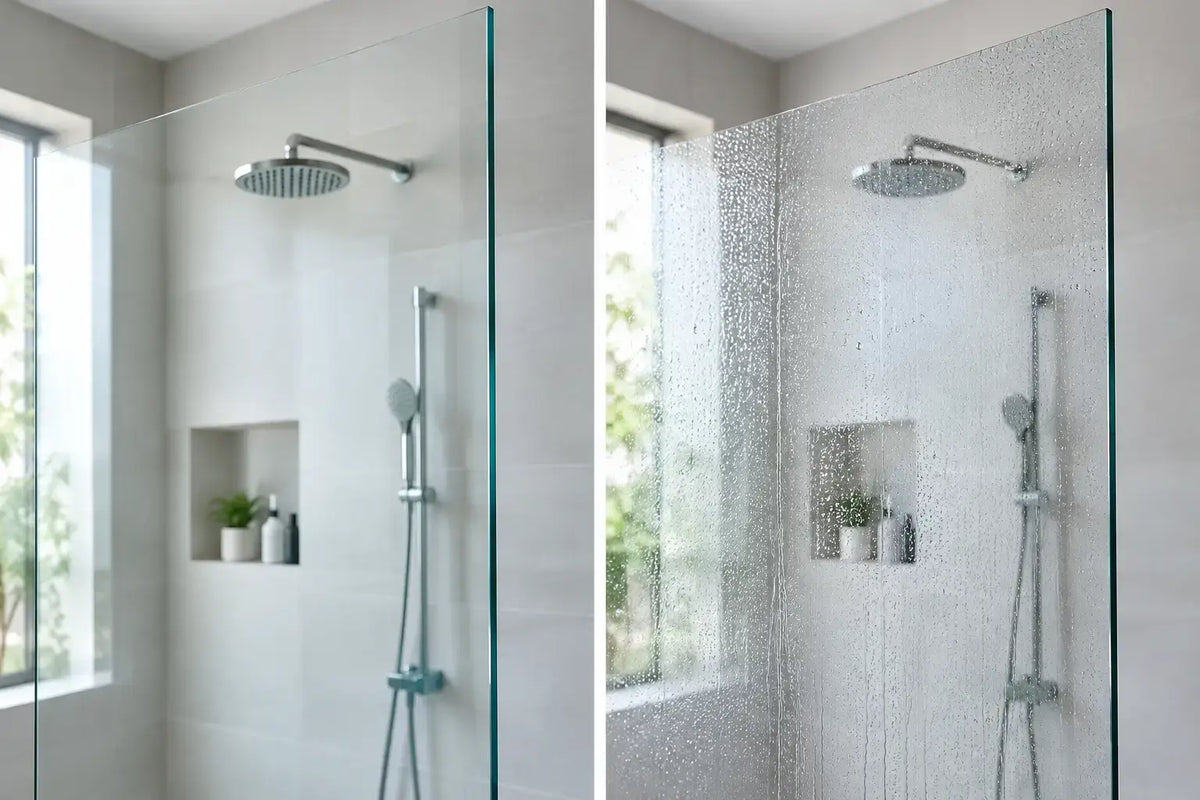
A shower door can look spotless after a deep clean, then develop cloudy spots and soap scum within days. The difference between coated versus uncoated shower glass is not simply whether water beads on the surface. It is the difference between glass that is left exposed to daily buildup and glass with an ultra-thin barrier designed to make that buildup easier to manage.
For homeowners dealing with hard water, that distinction matters. Shower glass is used constantly, exposed to minerals, body oils, shampoo, conditioner, and soap residue. Cleaning can restore clarity, but protection helps preserve it between cleanings.
Coated Versus Uncoated Shower Glass: The Core Difference
Uncoated shower glass is bare glass. Although it feels smooth, glass is microscopically porous. Those tiny irregularities can give minerals and residue places to cling. When water dries on the door, calcium, magnesium, and other dissolved minerals remain behind. Add soap scum to the mix, and the result is the familiar haze, streaking, and white spotting that can make a newer shower enclosure look neglected.
Coated shower glass has been treated with a protective technology formulated to chemically bond with the glass surface. Rather than sitting on top like a temporary polish, a quality protective coating creates an ultra-thin, hydrophobic barrier. That barrier changes how water and many contaminants interact with the glass, helping water sheet or bead away more readily and reducing the opportunity for residue to grip the surface.
A coating does not make a shower door maintenance-free. It does make routine maintenance less demanding. That is a meaningful advantage in a bathroom where water exposure is unavoidable.
What Changes in Daily Cleaning?
The most noticeable difference is usually the effort required to keep the glass clear. On uncoated glass, water spots can become more stubborn over time. A quick wipe may remove fresh moisture, but dried mineral deposits often need a dedicated hard-water stain remover and more focused cleaning. If buildup has been ignored for months, restoration can require repeated treatment.
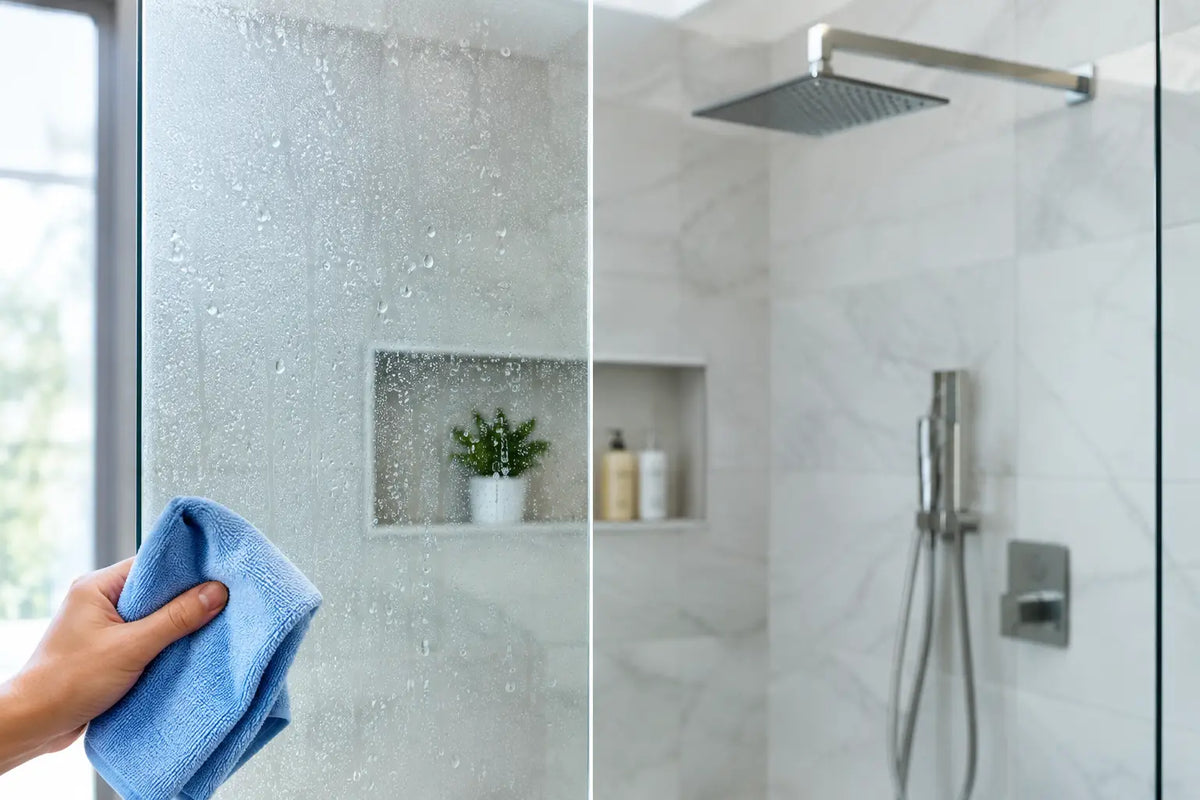
On coated glass, fresh water residue is less likely to bond tightly to the surface. A squeegee or microfiber towel after showering can go much further, and periodic cleaning is generally faster. Instead of fighting embedded-looking haze every weekend, homeowners can often maintain a cleaner appearance with minimal effort.
That difference becomes especially clear in homes with hard water. In areas with high mineral content, bare shower glass may need frequent intervention simply to stay presentable. A hydrophobic coating will not remove minerals from the water, but it helps limit how aggressively those minerals attach to the glass.
Water spotting and soap scum are different problems
Water spots are the residue left after water evaporates. Soap scum is a more complex film made from soap ingredients, hard-water minerals, oils, and other bathroom residue. Both can affect uncoated glass, but they do not always respond to the same cleaning approach.
A coating helps with both by making the glass easier to release contaminants from during regular care. Still, it is wise to use the right product for the problem. A hard-water stain remover is intended for mineral deposits, while a gentle maintenance cleaner is better suited to routine cleaning without leaving behind films that can dull the surface.
The Trade-Offs to Consider
Coated glass has a clear maintenance advantage, but it requires proper preparation and reasonable care. Applying a protective coating over existing soap scum, silicone residue, or mineral staining can limit results. The glass should be thoroughly cleaned and fully dry before treatment so the coating can chemically bond to the surface as intended.
The other trade-off is that coatings are not all the same. Some consumer products provide short-lived water beading because they rely on a surface treatment that wears away quickly. A professional-grade coating designed for glass is different from a temporary spray. Look for a treatment specifically made to bond with silica-based surfaces, with clear instructions for preparation, application, and maintenance.
Uncoated glass has one apparent advantage: there is no upfront treatment step. But skipping protection can mean more cleaning labor, more frequent use of stain removers, and greater odds that mineral buildup will become difficult to remove. For a guest bathroom that sees limited use, that may be an acceptable trade-off. For a primary shower used every day, it often is not.
How Coatings Protect Glass Without Changing Its Look
A properly applied shower-glass coating should be invisible. It does not create a tinted film or change the design of a frameless enclosure. Its work happens at the surface level, where it helps reduce the ability of water and residue to settle into the microscopic texture of untreated glass.
The term hydrophobic means water-repellent. On a treated surface, water is more likely to form droplets and move away rather than spreading into a broad film. This can reduce drying marks and make the door easier to wipe down. Depending on the coating and water conditions, some water may also sheet off the surface. The practical goal is the same: less residue left behind after each shower.
This protection is particularly valuable for clear glass doors, where every spot is visible in direct bathroom lighting. It can also help preserve the polished appearance of glass panels, mirrors, and tile that receive frequent water exposure.
Choosing the Right Path for Your Shower Door
If your current shower glass is cloudy or visibly spotted, start with restoration. Protective coatings work best on a clean surface, not over accumulated mineral deposits. Remove hard-water stains and soap scum first, rinse thoroughly, and allow the glass to dry completely. Once clarity is restored, a coating can help protect the effort you put into cleaning it.
If the glass is new or recently installed, treatment before heavy use is often the simplest route. The surface is already clean, and prevention is easier than restoration. This is also a practical time to establish a low-effort routine: use a squeegee after showering when possible, wipe the door with a clean microfiber towel as needed, and avoid abrasive pads that can damage glass or surrounding hardware.
For DIY homeowners, a kit that pairs surface preparation with a hydrophobic protective coating can create a more complete system than a cleaner alone. ShopDFI focuses on that system approach: restore the surface when needed, apply protection that chemically bonds, then maintain clarity with less scrubbing and fewer harsh chemicals.
Avoid habits that work against the coating
Even protected glass benefits from smart care. Abrasive powders, harsh scouring pads, and products that leave heavy residue can make any shower door harder to maintain. They may also interfere with the easy-to-clean performance you expect from a treated surface.
Use non-abrasive tools and cleaners intended for glass. If hard-water buildup begins to appear, address it early rather than allowing it to cure onto the surface. A coating reduces the work, but consistent light maintenance is still better than occasional aggressive scrubbing.
Is Coated Shower Glass Worth It?
For households frustrated by recurring spots and soap scum, coated shower glass is usually worth considering because it targets the reason cleaning feels repetitive. It does not just make the door look good on the day you clean it. It helps reduce the surface adhesion that turns normal shower use into visible buildup.
The value depends on your water quality, shower use, and expectations. A lightly used bathroom with soft water may not show a dramatic difference immediately. A busy primary bath with hard water often will. In either case, the strongest result comes from combining a rigorously tested protective coating with a simple, regular care routine.
A clear shower door should not demand a major cleaning project every time company is coming over. Start with clean glass, protect it before buildup becomes the problem, and let everyday maintenance stay where it belongs: quick, manageable, and effective.

Leave a comment
This site is protected by hCaptcha and the hCaptcha Privacy Policy and Terms of Service apply.