

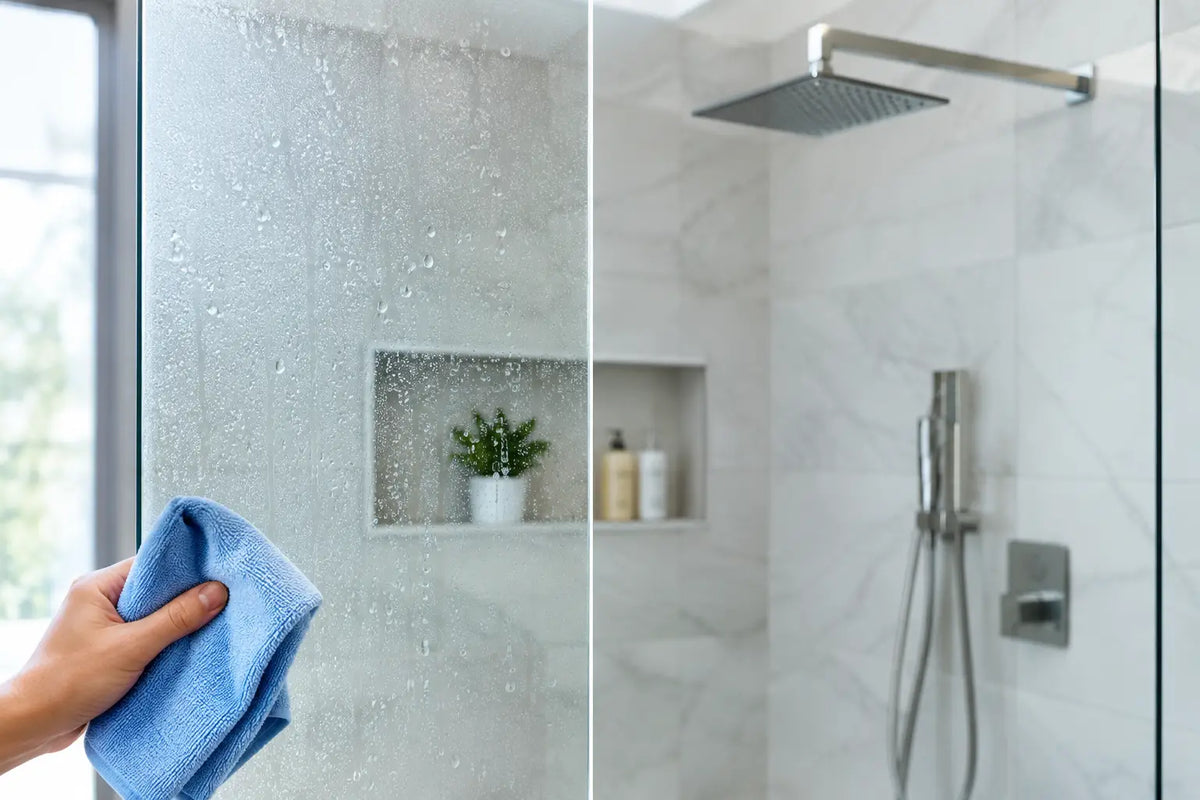
A shower door can look freshly installed one week and cloudy the next, especially in homes with hard water. The shower glass protection results homeowners want are not a temporary shine after cleaning. They are clearer glass between cleanings, fewer stubborn mineral marks, less soap-scum buildup, and a bathroom that takes minutes rather than elbow grease to maintain.
The difference comes down to treating the glass as a surface that needs protection, not just repeated cleaning. A quality protective coating chemically bonds with the glass to create an ultra-thin, hydrophobic barrier. That barrier helps water bead and release more easily, so the minerals, soap residue, and body-care products carried in shower water have less opportunity to cling to the surface.
What Shower Glass Protection Results Look Like
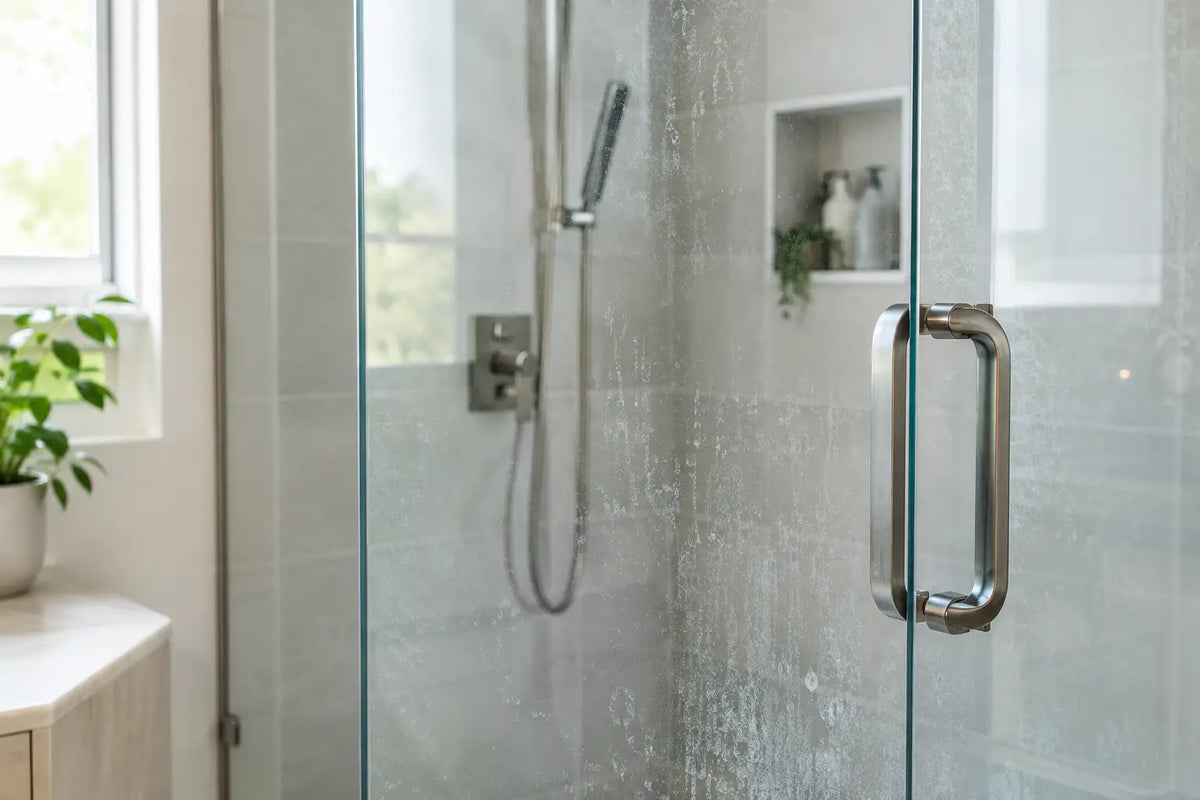
The first visible result is usually water behavior. On untreated shower glass, water tends to spread into sheets, then dry in place. As the water evaporates, it leaves behind calcium, magnesium, and other dissolved minerals. Those deposits create white spots, dull haze, and eventually a rough-feeling surface that traps even more residue.
Protected glass behaves differently. Water beads more readily and is easier to move off the door with a quick squeegee or microfiber towel. This does not mean a treated door never gets wet, never needs cleaning, or cannot develop deposits. It means the residue has a harder time establishing a grip on the glass, which changes the entire maintenance routine.
Homeowners commonly notice these practical outcomes:
- Water spots appear less quickly and are lighter when they do form.
- Soap scum and shampoo residue wipe away with less effort.
- Daily drying takes less time because water releases more easily.
- Glass maintains a clearer, brighter appearance between scheduled cleanings.
- Fewer harsh chemicals and abrasive scrubbing sessions are needed to manage buildup.
Why Glass Gets Cloudy in the First Place
Glass may feel perfectly smooth, but at a microscopic level it has natural porosity. In a shower, those tiny surface irregularities give minerals, soap scum, and airborne bathroom residue places to settle. Repeated wet-and-dry cycles make the problem worse, particularly when the shower is not dried after use.
Hard water is the most familiar culprit, but it is not the only one. Bar soap, body wash, conditioner, shaving products, and cleaning-product residue can all contribute to film on the glass. If deposits remain for long periods, they can become increasingly difficult to remove. In severe cases, minerals can damage the surface itself through etching. A standard cleaner may remove surface grime without addressing the reason new buildup returns so quickly.
A protective coating is designed to address that vulnerability. Rather than sitting on top of glass like a short-lived polish, a professionally formulated treatment chemically bonds to the silica-based surface. The resulting hydrophobic barrier is exceptionally thin, so it does not change the appearance of clear glass. It changes how water and common shower contaminants interact with it.
Protection Is Not a Substitute for Cleaning
Realistic expectations matter. Shower glass protection does not eliminate maintenance, and claims that it does should be treated cautiously. A coating makes cleaning easier and helps preserve clarity, but it cannot prevent contamination from landing on a shower door.
The best results come from pairing protection with a simple routine. After showering, use a squeegee or clean microfiber towel to remove most water from the glass. This takes less than a minute and significantly limits the minerals left behind as droplets dry. Then clean the glass periodically with a non-abrasive, coating-friendly product to remove any light film before it becomes stubborn buildup.
How often you clean depends on your water quality, household size, ventilation, and product use. A single-person household with soft water may need very little beyond regular drying. A busy family bathroom in a hard-water area will still benefit from routine cleaning, but the work should be noticeably more manageable than it was on untreated glass.
Avoid abrasive pads, harsh powders, and highly aggressive cleaners unless the product instructions specifically call for them. Abrasives can scratch glass or wear down a protective treatment prematurely. The goal is not to attack the surface each week. It is to prevent residue from becoming established in the first place.
The Results Depend on Preparation
A coating performs only as well as the surface underneath it. Applying protection over existing soap scum, mineral deposits, or oily residue can trap the problem beneath the treatment or interfere with proper bonding. The glass needs to be thoroughly cleaned and restored before application.
For light buildup, a dedicated shower-glass cleaner may be enough. For obvious white spotting or haze, a hard-water stain remover formulated for glass can help dissolve mineral deposits without relying on excessive abrasion. The door should then be rinsed and dried completely. Any remaining residue can reduce the uniformity and durability of the treatment.
Application also matters. Follow the product instructions for surface temperature, amount of product, dwell time, buffing, and cure time. More coating is not necessarily better. An even, properly prepared application gives the treatment the best opportunity to chemically bond and perform consistently.
This preparation step is where DIY users can achieve professional-grade results, provided they are patient. Rushing through it may still produce short-term water beading, but the long-term benefits are less predictable.
How Long Should the Benefits Last?
Longevity depends on the coating chemistry, the condition of the glass, water hardness, cleaning methods, and how the shower is used. A quality treatment is built for durability, but no surface protection is immune to constant exposure to hot water, cleansers, friction, and mineral-heavy residue.
A well-maintained coating should provide ongoing easy-to-clean performance rather than a dramatic effect that disappears after a few showers. You may notice that water no longer releases as quickly when the treatment begins to wear. You may also see that routine cleaning takes more effort or that spotting returns faster. Those are practical signs it may be time for maintenance or reapplication.
It is also worth separating water repellency from stain resistance. Water beading is a useful visual signal, but the more meaningful result is whether the glass remains easier to clean and resists the stubborn buildup that causes lasting haze. In hard-water homes, drying the door after use remains one of the most effective ways to extend that benefit.
A Better System Than Endless Scrubbing
Many homeowners cycle between strong cleaners, vinegar-based remedies, and intensive scrubbing because the shower looks better for a few days, then the spots return. That cycle treats the visible symptom while leaving porous, unprotected glass exposed to the same conditions.
A surface-care system takes a more durable approach: remove existing deposits, apply a rigorously tested protective treatment, and maintain the door with gentle, consistent care. Diamon-Fusion International developed this type of coating technology to create an ultra-thin barrier that supports easier cleaning without relying on harsh chemical routines.
The payoff is not merely cosmetic, although a spotless shower door certainly changes the look of a bathroom. It is the confidence that regular upkeep will stay regular. Instead of setting aside time for periodic restoration projects, homeowners can preserve clear glass through a few simple habits.
When Protection May Not Solve the Problem
Not all cloudiness is removable. If shower glass has been deeply etched by years of mineral deposits, the damage may be within the surface rather than sitting on it. Cleaning may improve the appearance, but it cannot always restore original clarity. In that situation, restoration should happen before protection, and replacement may be the only option for severely damaged glass.
Likewise, a protective coating cannot correct failed seals, poor ventilation, mold around framing, or residue collecting in door tracks. It protects the glass itself, not every component of the shower enclosure.
Still, applying protection to new glass or freshly restored glass is one of the most practical ways to preserve its condition. The best time to make cleaning easier is before hard-water staining becomes the next weekend project.

Leave a comment
This site is protected by hCaptcha and the hCaptcha Privacy Policy and Terms of Service apply.