

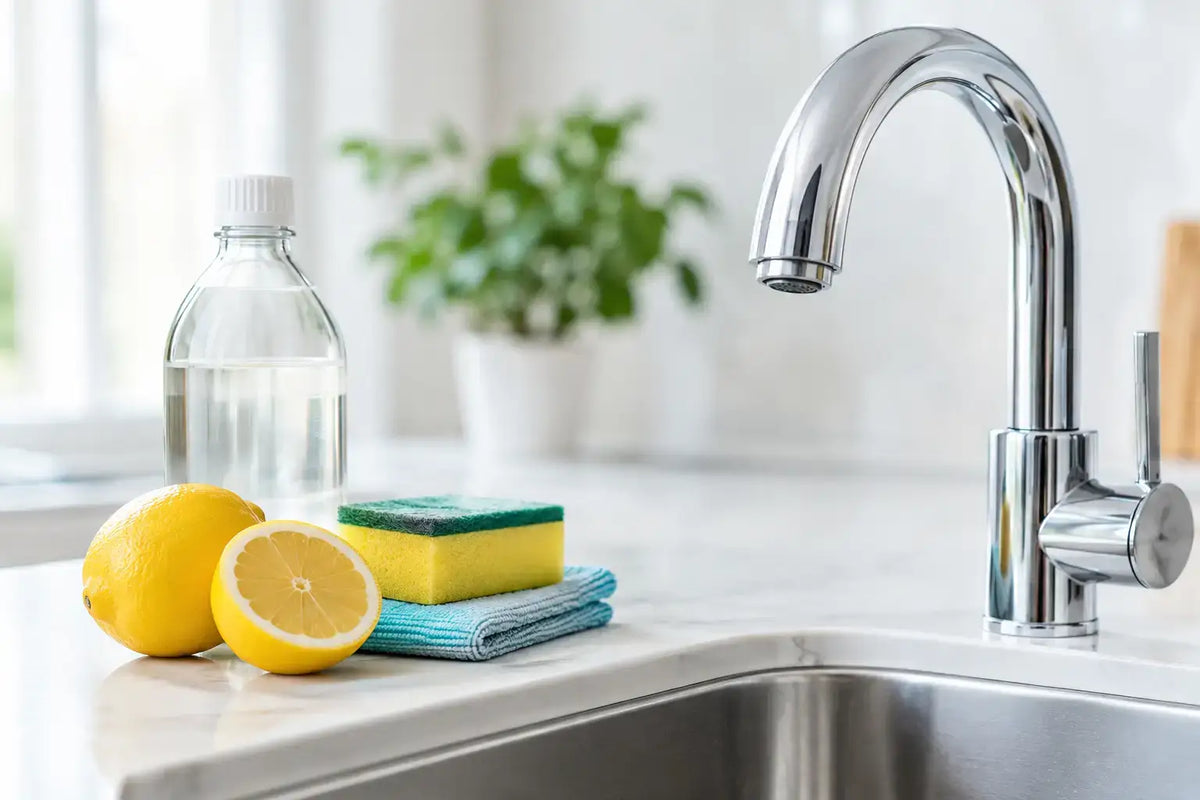
Hard water can turn a spotless shower door cloudy in a matter of days. Those white spots and chalky rings are not simply a cleaning issue - they are mineral deposits left behind when water evaporates. The best ways to prevent limescale focus on stopping that residue from drying, reducing the minerals reaching high-use surfaces, and making those surfaces easier to maintain.
Limescale is most visible on clear glass, polished chrome, dark tile, and stainless steel because even a thin mineral film changes how light reflects. Left in place, the deposits can become harder, bond more firmly to the surface, and trap soap scum around them. Prevention is less about finding a stronger cleaner and more about building a routine that keeps minerals from getting a foothold.
Why Limescale Forms So Quickly
Hard water contains dissolved minerals, primarily calcium and magnesium. Water itself is not the problem. The trouble starts after a shower, sink use, or car wash, when droplets sit on a surface and evaporate. The water disappears, but the minerals remain.
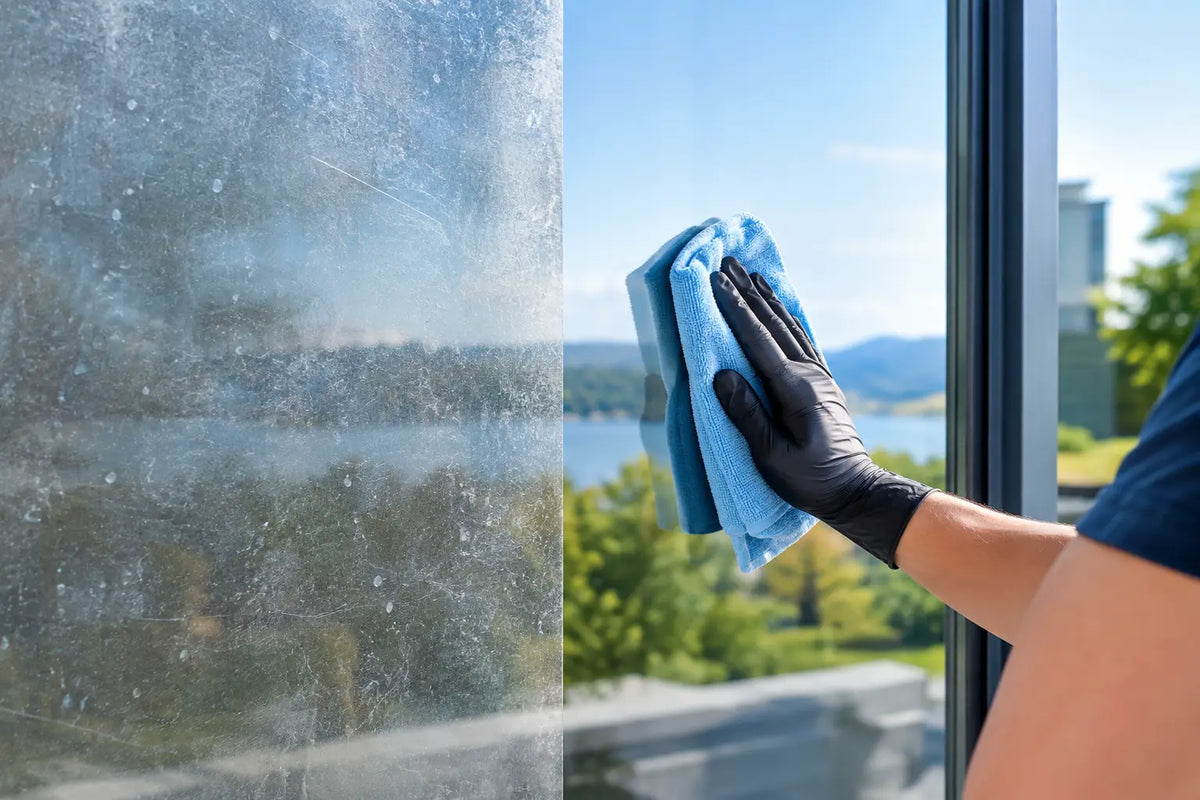
Glass is especially vulnerable because it is not perfectly smooth at a microscopic level. Untreated glass has tiny peaks and valleys where mineral residue, soap ingredients, and body oils can collect. Repeated wetting and drying layers those deposits over time. What first looks like a few water spots can become a dull, stubborn haze.
A practical prevention plan accounts for both the water source and the surface. Homes with very hard water may benefit from water treatment, but every household can reduce buildup through better drying, gentler maintenance, and surface protection.
1. Remove Water Before It Dries
The simplest habit is also one of the most effective: remove standing water from shower glass, tile, and fixtures immediately after use. A quick pass with a shower squeegee takes less than a minute and prevents many mineral-rich droplets from drying in place.
Start at the top of the glass and pull downward in overlapping strokes. Wipe the squeegee blade afterward so it does not transfer residue back onto the next surface. For fixtures, corners, and shower-door tracks, use a clean microfiber towel to absorb the water a squeegee cannot reach.
This approach works because it interrupts the evaporation cycle. It will not eliminate minerals in the water, but it keeps them from becoming visible deposits on the surface.
2. Improve Bathroom Ventilation
A steamy bathroom stays wet longer, which gives soap, oils, and minerals more opportunity to settle and cling to shower surfaces. Run the exhaust fan during showers and for at least 20 minutes afterward. If your bathroom does not have effective ventilation, opening a window or leaving the shower door open can help moisture escape.
Ventilation is not a replacement for drying the glass, but it makes the entire space easier to maintain. It also helps reduce the damp conditions that encourage mildew around grout, caulk, and shower tracks.
3. Clean Mineral Residue Before Protecting the Surface
One of the most overlooked best ways to prevent limescale is starting with a truly clean surface. A coating or protectant cannot reverse existing mineral buildup. If it is applied over haze, water spots, or soap scum, it may seal in the appearance of the problem and reduce the quality of the result.
Use a surface-appropriate hard-water stain remover to break down existing deposits, following the product directions closely. Avoid reaching immediately for abrasive pads, razor blades, or harsh powders. These methods can scratch glass, damage finishes, or create microscopic defects that make future buildup more likely.
After cleaning, rinse away residue and dry the surface thoroughly. The goal is clean, clear glass or a residue-free fixture before moving on to any protective treatment.
4. Apply a Protective Hydrophobic Coating to Glass
Cleaning removes what is already on the surface. Protection changes how easily water and residue can stick in the future.
A quality protective coating for glass is designed to chemically bond with the silica-based surface and create an ultra-thin hydrophobic barrier. Instead of spreading into a sheet that dries across the glass, water is encouraged to bead and roll away. Less water left behind generally means less mineral residue, reduced soap-scum buildup, and less frequent deep cleaning.
This distinction matters. Many temporary spray products add short-lived shine, but can wear away quickly or leave a film that attracts grime. A rigorously tested glass protectant is intended to become part of a longer-term maintenance system, provided the surface is properly prepared and the product is applied as directed.
Hydrophobic protection is particularly useful for shower doors, bathroom mirrors, glass tile, vehicle windshields, and other high-visibility silica-based surfaces. It does not mean a surface never needs cleaning. It means routine cleaning should require less effort because the deposits have less opportunity to attach.
5. Use Clean, Non-Abrasive Tools
The wrong cleaning tool can undermine even a good prevention routine. Scouring powders, coarse sponges, and dirty towels may leave scratches, residue, or lint behind. Those small imperfections give minerals more places to settle and can make a polished surface look dull.
Use a soft microfiber cloth for drying and routine wipe-downs. Wash microfiber separately from lint-producing fabrics and skip fabric softener, which can coat the fibers and reduce absorbency. Replace worn squeegee blades as soon as they begin leaving streaks.
For chrome, stainless steel, and coated glass, use cleaners formulated for the specific material. A product that works well on ceramic tile is not automatically right for every fixture or protective treatment.
6. Address Very Hard Water at the Source
If white scale appears quickly on faucets, dishes, shower doors, coffee makers, and appliance interiors, the water itself may be unusually hard. In that case, household habits alone may not be enough to keep pace with the mineral load.
A water softener reduces calcium and magnesium before water enters the plumbing system. It can lower limescale throughout the home, including inside water heaters, dishwashers, and washing machines. The trade-off is the upfront cost, ongoing salt or maintenance requirements, and the need to select a system sized for your household.
For renters or homeowners who do not want a whole-home system, targeted solutions can still help. A filtered showerhead may reduce certain contaminants, though results vary by filter type and local water chemistry. It should not be treated as a guaranteed substitute for a true water softener.
7. Make Maintenance Frequent but Light
Limescale prevention works best when it is built into normal household care instead of saved for a monthly scrubbing session. Squeegee after each shower, wipe fixtures every few days, and inspect glass before buildup becomes visible from across the room.
A weekly maintenance clean with a compatible, non-abrasive product is often enough for protected shower glass. Unprotected surfaces or homes with especially hard water may need attention more often. The key is to remove the first thin layer of residue before it hardens into a deposit that demands stronger chemistry and more labor.
Keep an eye on places water hides: the bottom edge of shower doors, door tracks, faucet bases, grout lines, and the lower corners of glass panels. These areas dry slowly and are often where scale returns first.
A Better Long-Term Standard for Clean Surfaces
The goal is not to scrub harder every time water spots appear. It is to create surfaces that shed water more effectively, then support them with simple habits that keep mineral residue from building layer by layer. For homeowners tired of cycling through harsh cleaners, a properly cleaned and protected surface can turn shower maintenance from a major chore into a quick, predictable part of the routine.
When water beads, drains, and dries with minimal residue, clear glass stays clear longer - and the time once spent fighting limescale can go back to enjoying a cleaner-looking home.

Leave a comment
This site is protected by hCaptcha and the hCaptcha Privacy Policy and Terms of Service apply.