

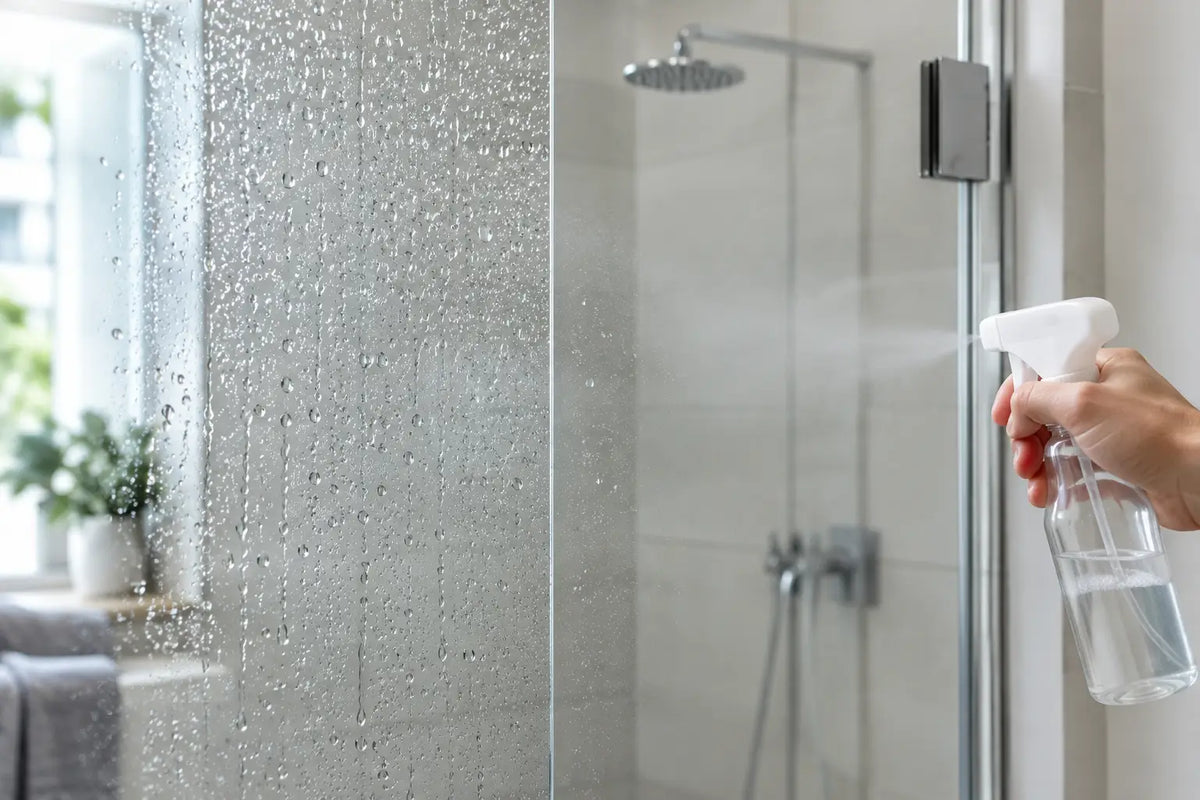
A clear shower door can look cloudy again within days when hard water, soap residue, and body oils have a place to cling. The best hydrophobic coating for shower doors does more than make water bead for a photo. It creates a durable, ultra-thin barrier that helps water and contaminants release before they become stubborn spots, film, and mineral buildup.
That distinction matters. Many products make glass feel slick temporarily, but a true protective coating is designed to work with the surface itself. For homeowners tired of scrubbing the same white haze every weekend, choosing the right coating can turn shower-door care from a constant correction job into a simple maintenance routine.
What Makes a Hydrophobic Shower-Door Coating the Best?
Glass may look perfectly smooth, but untreated glass contains microscopic pores and irregularities. Those tiny surface features give minerals in water and residue from soaps and shampoos places to settle. As water evaporates, it leaves those materials behind. Over time, the result is the familiar combination of hard-water spots, dullness, and soap scum that seems to return immediately after cleaning.
A quality hydrophobic coating changes how the glass interacts with water. Instead of spreading into a thin sheet and drying across the door, water forms tighter droplets that are more likely to roll or rinse away. Less water remaining on the surface means fewer minerals left behind.
The best options go further by chemically bonding with the glass rather than sitting on top like a temporary dressing. Chemical bonding creates a more durable barrier because the protection becomes part of the surface at a microscopic level. A coating should be ultra-thin and clear, so it improves water repellency without changing the appearance of the shower enclosure.
Durability is not the only measure of quality. A practical shower-door coating also needs to be safe and manageable for a homeowner to apply. Look for a system with clear surface-preparation instructions, reasonable cure times, and maintenance guidance that does not require harsh chemicals to preserve the treatment.
Hydrophobic Coating vs. Shower-Door Cleaner
A cleaner and a coating solve different problems. Cleaner removes what is already on the glass. A hydrophobic coating helps reduce how much new residue can attach after the glass is clean.
This is why applying a coating over existing mineral deposits is rarely effective. The coating can only protect the surface it reaches. If hard-water staining, soap scum, or oily film remains, it can interfere with adhesion and leave the door looking inconsistent. Restoration comes first, then protection.
For lightly soiled doors, a thorough cleaning may be enough preparation. For glass with visible white scale, cloudy patches, or etched-looking marks, use a purpose-made hard-water stain remover appropriate for glass before coating. Some stains are deposits that can be removed; others are permanent damage caused when minerals have remained on the surface for too long. A coating can help prevent additional buildup, but it cannot reverse deep etching already in the glass.
Chemical Bonding Is the Difference That Lasts
Temporary water repellents can provide a satisfying initial result. Water may bead dramatically, and the glass may feel smoother. The trade-off is that many surface treatments wear away quickly under hot water, daily shower use, cleaning products, and physical wiping.
A professionally developed coating system uses chemistry designed for silica-based surfaces such as glass. When properly applied to a clean, dry shower door, the protective ingredients chemically bond to the glass and form an ultra-thin hydrophobic barrier. This approach is engineered for durability without creating a thick layer that can haze, peel, or change the clarity of the door.
For this reason, the best hydrophobic coating for shower doors is usually not the product with the boldest instant-beading claim. It is the one that combines verified surface compatibility, proper bonding technology, clear application requirements, and realistic maintenance expectations.
ShopDFI's surface-care approach is built around this principle: clean and restore the glass first, then protect it with a coating that helps make routine care faster and less chemical-intensive.
How to Choose the Right Coating for Your Shower
Start with your water conditions. If your home has hard water, mineral control should be your top concern. A hydrophobic barrier can significantly reduce the opportunity for deposits to dry onto glass, but it works best alongside a quick daily squeegee or rinse. The coating reduces the work required; it does not make water chemistry disappear.
Next, consider the door itself. Frameless glass doors, sliding enclosures, and fixed panels can all benefit from protection, but seals, metal hardware, and adjacent tile may need separate care. Read product directions carefully to confirm the coating is intended for shower glass and to understand whether nearby surfaces should be masked or wiped immediately if overspray occurs.
Application also matters. Choose a coating with a defined process, not vague instructions to simply spray and wipe. A dependable system should explain how to clean the glass, how dry it must be, how to apply an even layer, how long to let it cure, and when normal shower use can resume. Those details protect your result.
Finally, think about maintenance compatibility. Abrasive pads, aggressive acidic cleaners, and highly alkaline degreasers can reduce the useful life of many protective treatments. Once the shower door is coated, mild maintenance products and a soft microfiber cloth are generally the better long-term choice.
A Reliable Application Process
The best coating cannot compensate for rushed preparation. Plan to treat the shower door when it can remain dry for the full curing period recommended by the manufacturer.
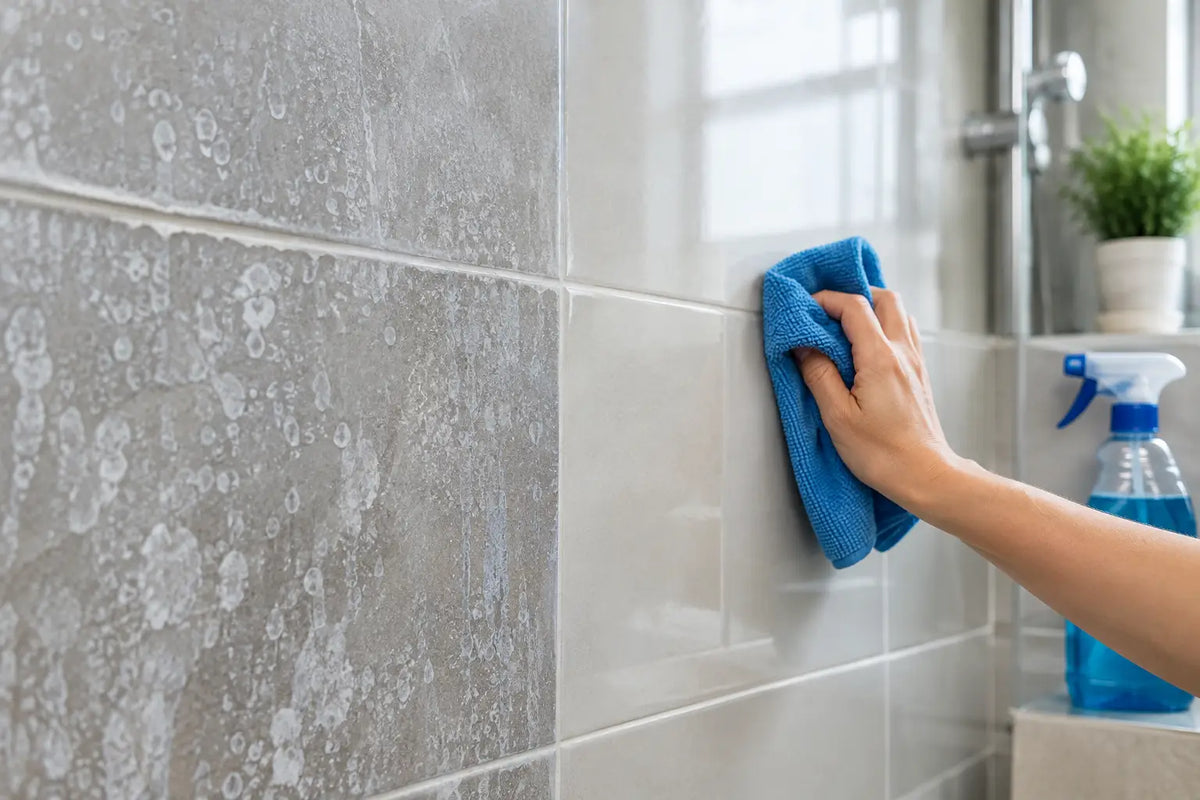
First, remove residue completely. Clean both sides of the glass as needed, paying special attention to the lower sections where water sits and to areas near handles and door edges where oils collect. If hard-water deposits are present, address them before moving on.
Then rinse away cleaner residue and dry the glass thoroughly. Water hiding along the bottom track, gasket, or edge can migrate onto the panel during application, so take an extra moment to dry those areas. The glass should be clean, cool, and dry before the coating is applied.
Apply the product evenly according to its directions. More is not necessarily better. An ultra-thin, uniform layer generally performs better than an overapplied coating that leaves visible streaks or requires excessive buffing. Allow the coating to cure as directed before exposing it to steam, water, or cleaning products.
After curing, test the surface with a small amount of water. You should see water gather into droplets and release more readily than it did on untreated glass. The visual result is useful, but the bigger payoff comes over the following weeks: reduced spotting, less soap film, and faster wipe-downs.
What Hydrophobic Protection Can and Cannot Do
A coating makes shower doors easier to clean, not maintenance-free. In homes with very hard water, some mineral residue can still collect where water repeatedly dries, especially along the bottom of a door or around hardware. The difference is that buildup should be less likely to bond tightly, making it easier to remove before it becomes a bigger problem.
It also cannot fix scratched glass, failed seals, or heavy etching. If your shower door looks permanently dull even after mineral deposits are removed, the glass may need restoration or replacement. A protective coating is most valuable when applied before damage becomes severe, though it remains useful after restoration to help preserve a renewed surface.
Expectations should be practical. The goal is not to eliminate every water droplet. The goal is a cleaner-looking shower door with far less effort, fewer harsh chemicals, and a better chance of keeping the glass clear over time.
Keep the Coating Working Longer
Once your shower door is protected, a simple routine helps extend the benefit. After showering, guide standing water toward the drain with a squeegee or use a microfiber towel for a quick wipe. This takes seconds and is especially helpful in hard-water areas.
Clean periodically with a non-abrasive product suited to coated glass. Avoid treating the door like an unprotected surface that needs heavy scrubbing every week. When residue does appear, remove it early rather than allowing it to bake onto the glass through repeated heat-and-dry cycles.
A good hydrophobic coating changes the job from fighting buildup to preventing it. Treat the glass while it is clean, follow the cure instructions, and let the barrier do what it is designed to do: keep your shower door clearer with minimal effort.

Leave a comment
This site is protected by hCaptcha and the hCaptcha Privacy Policy and Terms of Service apply.