

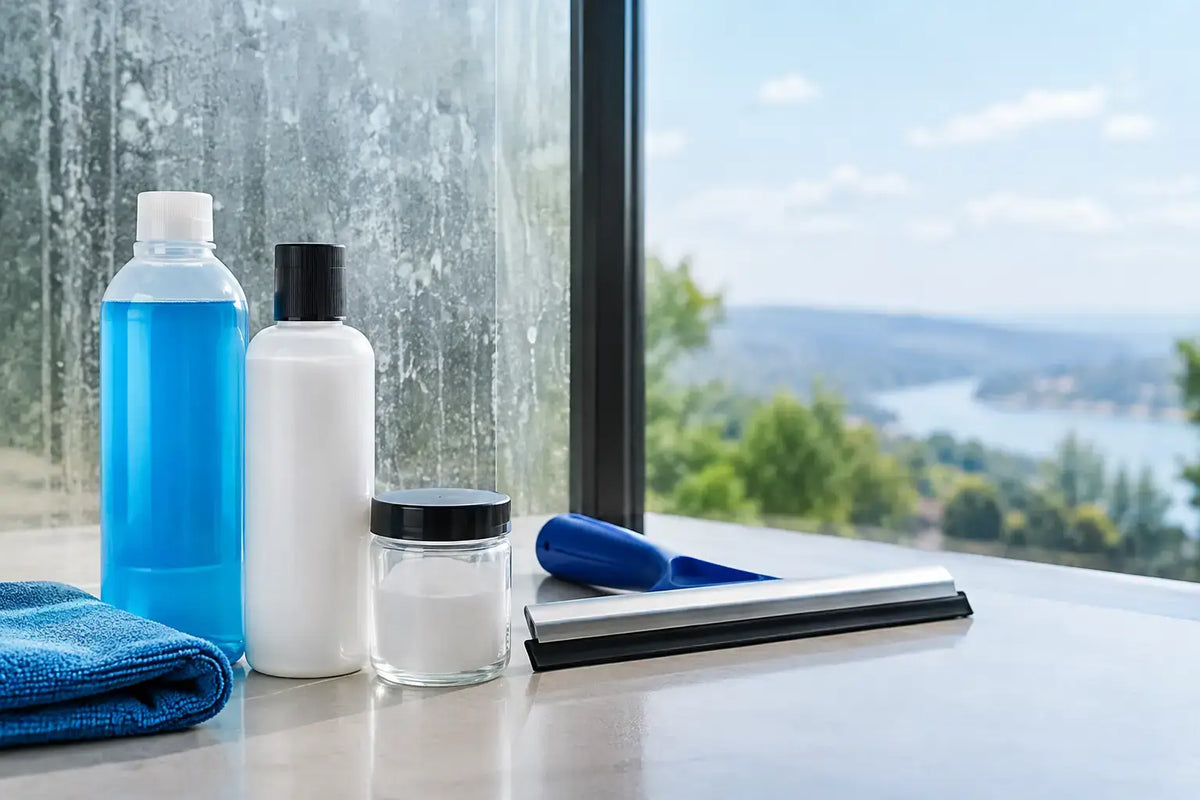
A shower door can look permanently cloudy even after a fresh round of scrubbing. The problem is often not dirt sitting on the surface. It is mineral buildup, soap scum, and residue that have settled into the microscopic texture of the glass. The right glass restoration products address that buildup first, then help keep it from returning so quickly.
That distinction matters. A standard glass cleaner may make a surface look better for a day, but it is not designed to break down stubborn hard-water deposits or create lasting water repellency. A practical restoration system works in stages: remove contamination, restore visible clarity where possible, protect the clean surface, and maintain it with minimal effort.
What Glass Restoration Products Are Designed to Do
Glass is smooth to the eye, but it is not perfectly smooth at a microscopic level. Untreated glass has tiny peaks and valleys that can hold minerals from hard water, soap residue, body oils, and airborne contaminants. When water evaporates, calcium, magnesium, and silica deposits can remain behind. Over time, those deposits create spots, haze, and a dull appearance that ordinary spray cleaners may not remove.
Glass restoration products are made for the job that routine cleaners cannot always handle. Depending on the product category, they may dissolve mineral deposits, lift soap scum, polish away light surface contamination, or prepare the glass for a protective treatment. The goal is clearer glass and a surface that is easier to maintain afterward.
Restoration is not always the same as repair. If hard-water staining has remained on glass for years, it can contribute to etching or permanent surface damage. A quality restoration product can often improve the appearance substantially, but it cannot always reverse deep physical damage. That is why early treatment makes such a difference, especially on shower doors and exterior glass exposed to sprinklers.
Cleaning, restoring, and protecting are different jobs
A daily cleaner removes fresh fingerprints, light water spots, and surface film. A restoration product targets accumulated residue that has bonded more tightly to the glass. A protective coating is applied after the glass is clean to reduce how easily water and contaminants cling in the future.
Treating these as separate steps prevents a common cycle: scrubbing a cloudy door every weekend, seeing a temporary improvement, and watching the spots return as soon as the water dries. When the glass is properly restored and protected, water is more likely to bead and sheet away instead of lingering on the surface. Less residue remains behind, which means less aggressive cleaning later.
Start by Identifying What Is on the Glass
The most effective approach depends on the source of the haze. A white, chalky film around the lower half of a shower enclosure usually points to hard-water minerals. A greasy or gray film may be soap scum mixed with body oils. Rainbow-like marks or a rough texture can signal more advanced mineral buildup or etching.
A simple test can help. Clean a small, inconspicuous area according to the product instructions, then dry it completely with a clean microfiber towel. If the clarity improves, surface contamination was likely the main issue. If the glass still appears cloudy, rough, or marked after deposits are removed, there may be etching or scratches that require a more specialized professional assessment.
Mirrors need extra care because the reflective backing can be damaged if liquid seeps behind the edge. Vehicle windshields call for products suitable for automotive glass and wiper-safe protection. Solar panels, tile, and coated surfaces may have their own manufacturer requirements. One bottle is not automatically the right answer for every surface.
A Better Process for Restoring Glass
Good results come from preparation as much as from the product itself. Before using any restoration treatment, remove loose dirt and rinse away grit. Scrubbing a dusty surface can create unnecessary abrasion, particularly on automotive glass or decorative panels.
Apply the restoration product to a manageable area and work it as directed. For many shower doors, using a non-scratch applicator or suitable pad provides more consistent contact than spraying and immediately wiping. Keep the surface wet for the recommended working time, then rinse thoroughly. Do not let a chemical cleaner dry on the glass unless its instructions specifically say to do so.
Once the deposits have been removed, dry the surface and inspect it in angled light. This is where missed haze becomes visible. If needed, repeat the treatment rather than pressing harder with an abrasive tool. More force is not necessarily more effective, and aggressive scouring can leave fine scratches that catch light and make glass appear dull.
For homeowners dealing with recurring shower-door buildup, a dedicated restoration and protection kit can make the sequence simpler. ShopDFI systems are designed to pair surface preparation with a hydrophobic protective coating, so the treatment does more than provide a short-lived shine.
Protect clean glass before spots return
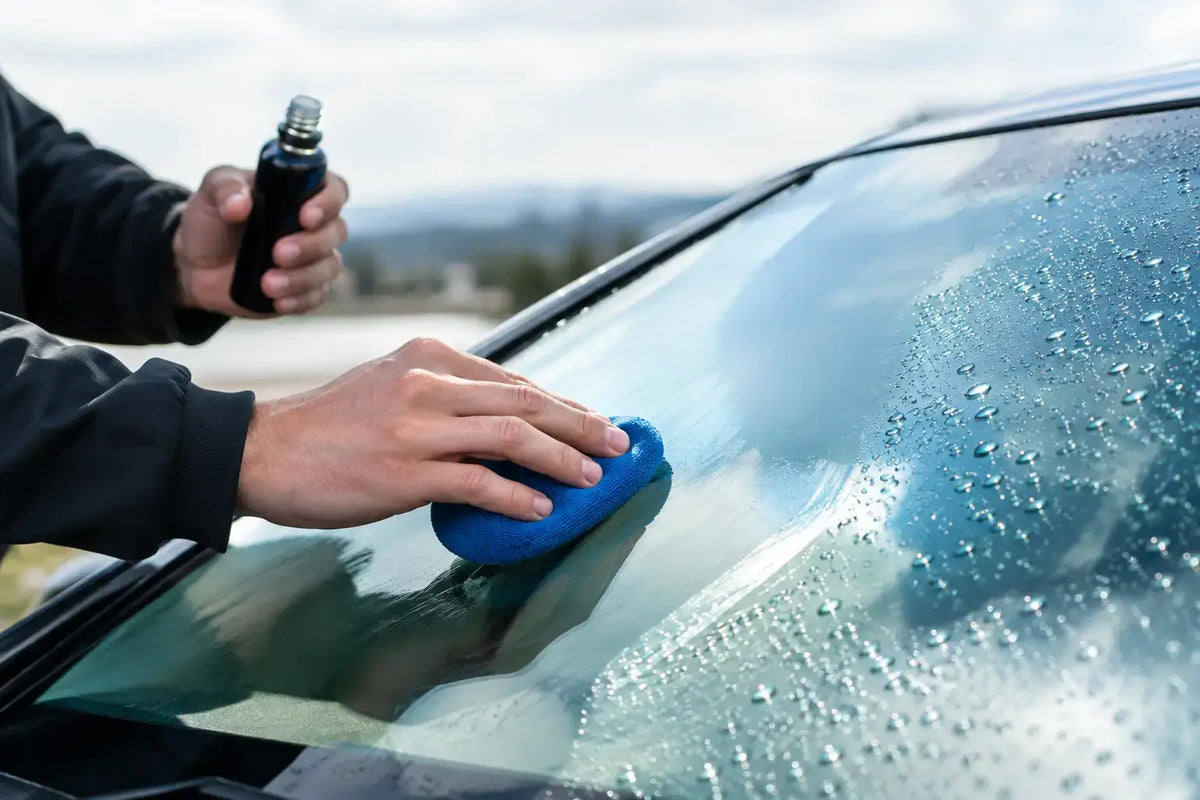
After restoration, protection is the step that changes the maintenance routine. Protective glass coatings chemically bond with porous silica-based surfaces to form an ultra-thin barrier. Unlike a temporary oily film, a properly applied coating is designed to become part of the surface treatment rather than simply sitting on top of it.
That hydrophobic barrier helps water bead and move off more easily. It also reduces the tendency for soap scum and mineral-rich water to grip the glass. In a shower, this can mean less visible spotting between cleanings. On a windshield, it can improve water behavior during rain while making routine cleaning easier.
Protection has a trade-off: it must be applied to a truly clean, residue-free surface. Applying a coating over existing mineral deposits can trap the problem beneath the treatment and limit performance. Take the extra time to restore and dry the glass first. The coating step is where careful preparation pays off.
Choose Products Based on the Surface and the Problem
The best glass restoration products are not always the strongest-smelling or most abrasive. Look for products that clearly state their intended use and provide directions for the specific surface. A shower door with hard-water staining needs a different strategy than a bathroom mirror with light toothpaste splatter.
For bathrooms, prioritize products that remove mineral buildup without creating an exhausting, harsh-chemical routine. For windshields, use treatments intended for exterior automotive glass, and avoid household products that can smear, interfere with wiper performance, or leave distracting glare. For solar panels, follow panel manufacturer guidance and avoid methods that could scratch the glass or affect surrounding components.
Be cautious with viral cleaning shortcuts. Steel wool, abrasive powders, razor blades, and strong acids may appear to produce fast results, but they can damage glass, seals, metal trim, coatings, or nearby tile. Tempered shower glass deserves particular care because surface scratches can compromise its appearance and create future cleaning challenges.
A non-toxic, eco-conscious formula can be a meaningful advantage when you are cleaning enclosed bathroom spaces or maintaining glass regularly. Still, follow all label directions, use appropriate ventilation, and test any unfamiliar product in a small area first.
Keep Restoration Results Looking New
A protected surface does not eliminate cleaning. It makes cleaning more efficient. After a shower, a quick pass with a squeegee or soft microfiber cloth removes much of the water that would otherwise dry into spots. This takes seconds and reduces the workload for your weekly routine.
Use a gentle maintenance cleaner instead of returning to harsh cleaners every time you see a mark. Heavy abrasion and incompatible chemicals can shorten the useful life of some protective treatments. If water stops beading or the glass begins holding residue again, it may be time for a maintenance application rather than another intense restoration session.
The same principle applies beyond the bathroom. Keep windshields free of road film, wipe mirrors with a clean microfiber towel, and address sprinkler overspray on windows before minerals bake onto the surface. Small, regular habits protect the time you invested in restoration.
Clear glass is not just a cosmetic detail. It affects how clean a room feels, how much light moves through a space, and how often a household has to reach for another bottle of cleaner. Restore the buildup, protect the surface, and let an easier routine do the rest.

Leave a comment
This site is protected by hCaptcha and the hCaptcha Privacy Policy and Terms of Service apply.